

 1st - Gold
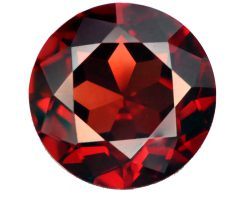 January
  February
  March
March 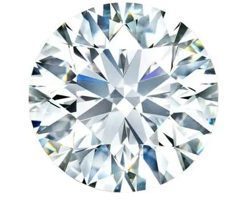 April
April 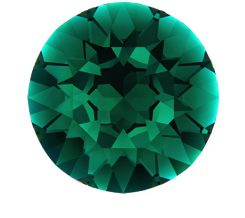 May
May 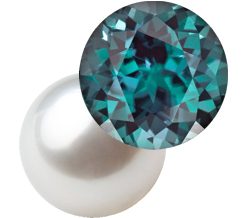 June
June 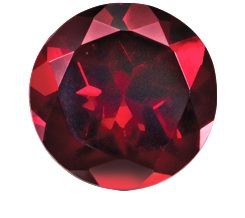 July
July 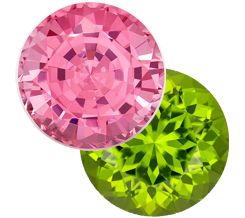 August
 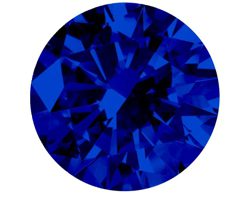 September
 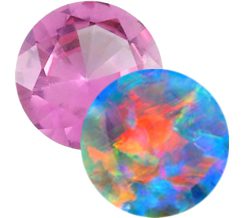 October
 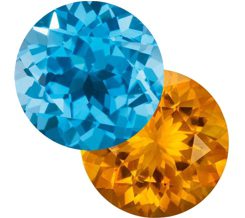 November
 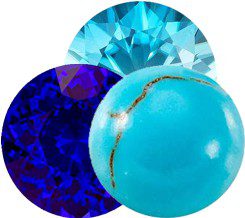 December
 Capricorn - Garnet
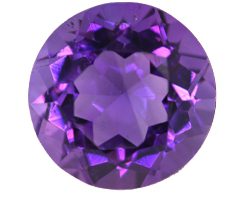
  Aquarius - Amethyst
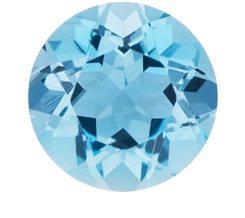
  Pisces - Aquamarine
  Aries - Diamond
  Taurus - Emerald
  Gemini - Pearl
  Cancer - Ruby
  Leo - Peridot
  Virgo - Blue Sapphire
  Libra - Opal
  Scorpio - Topaz
  Sagittarius - Tanzanite

WHAT CAUSES COLOUR IN GEMSTONES?
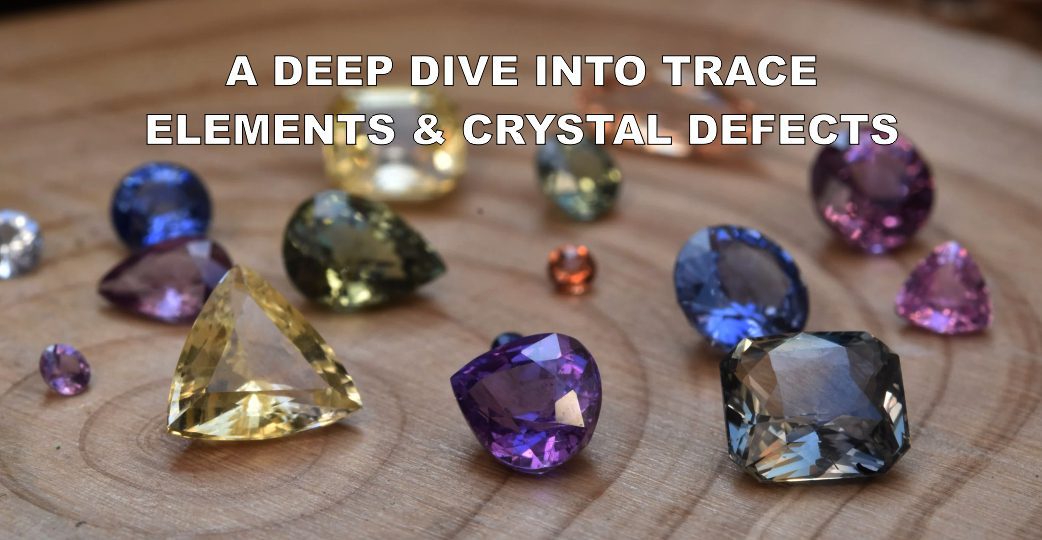
Colour is the most influential factor in a gemstone’s beauty and value. But colour is not simply a result of “what the stone looks like”. It’s a complex interaction between light, trace elements, atomic structure, and defects in the crystal lattice.
This article unpacks the science behind gemstone colour — not in simplified, surface-level terms, but with the depth expected from a serious collector, jeweller, gemmologist, or investor seeking authoritative insight.
Understanding Light & Colour: The Foundation
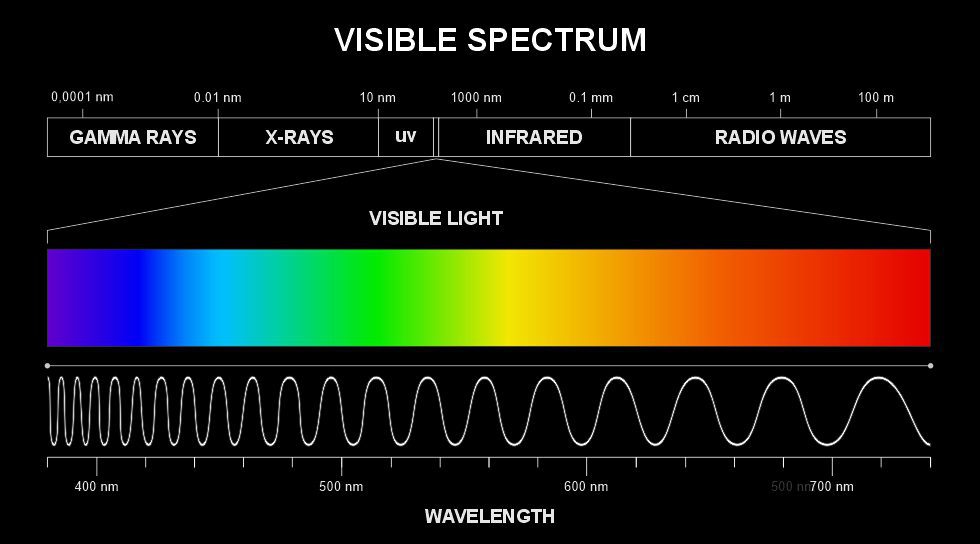
To understand gemstone colour, you must first understand how light behaves:
-
White light consists of all wavelengths (colours) from violet to red.
-
When light enters a gemstone, specific wavelengths are absorbed, while others are transmitted or reflected.
-
The wavelengths that escape and reach your eyes determine the colour you perceive.
This selective absorption is governed by trace elements, crystal defects, valence state changes, and charge transfers within the gemstone. Let’s break these down.
1. Trace Elements: The Colouring Agents Inside Crystals
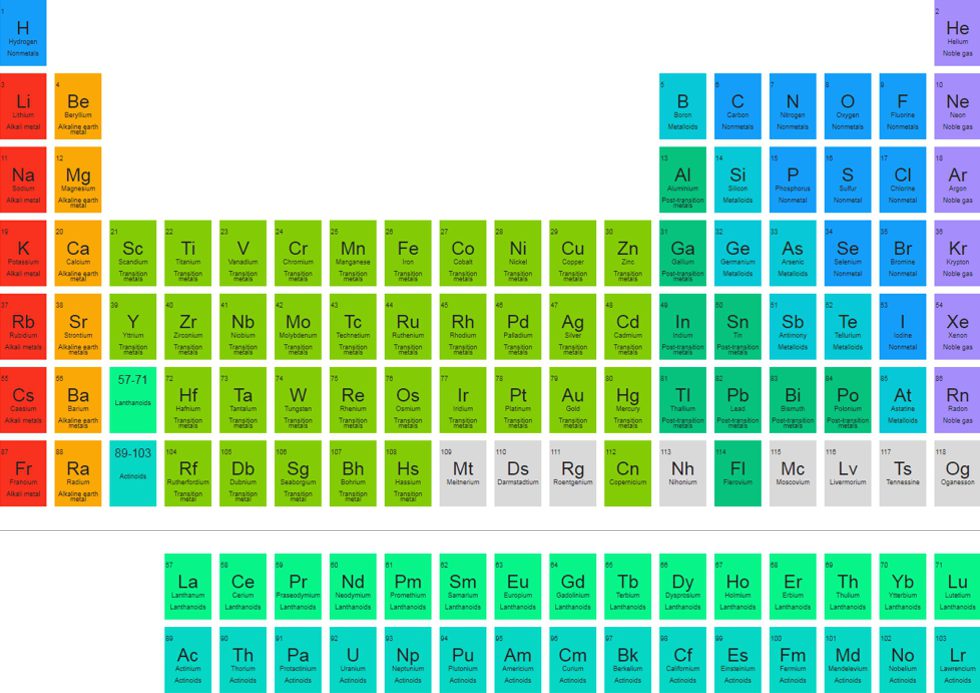
Trace elements are foreign chemical impurities that replace some atoms within the crystal structure. These atoms absorb specific wavelengths of light, producing a variety of colours.
Chromium (Cr³⁺) — The King of Colour
Chromium is responsible for some of the most iconic gemstone colours:
-
Ruby (Corundum) → Rich red
-
Emerald (Beryl) → Vivid green
-
Chrome Tourmaline → Bright green
Chromium creates intense colours because it causes strong absorption in the yellow and blue areas of the spectrum, letting red or green dominate.
Iron (Fe²⁺ / Fe³⁺) — The Versatile Absorber
Iron is the most common colouring agent and creates a wide range of colours depending on its valence state:
-
Amethyst → Fe³⁺ gives purple
-
Citrine → Heated Fe causes yellow/orange
-
Aquamarine → Fe²⁺ produces pale blue
-
Heliodor → Fe³⁺ results in golden yellow
Iron can also work in pairs with other elements, creating “charge transfer colours”.
Vanadium (V³⁺)
Vanadium creates green and blue colours:
-
Tsavorite garnet → V + Cr combination
-
Some emeralds → Vanadium-dominant green
Vanadium can mimic chromium’s colour behaviour but usually produces slightly cooler tones.
Titanium (Ti⁴⁺)
Titanium rarely colours gems alone but becomes important in combinations:
-
Blue sapphire (Corundum) → Fe²⁺ + Ti⁴⁺ charge transfer
-
Produces a strong, velvety royal blue tone
Copper (Cu²⁺)
Copper is responsible for some of the rarest gemstone colours:
-
Paraíba tourmaline → Electric neon blue/green
-
Azurite & Malachite → Deep blue-green copper carbonates
Copper produces extremely high saturation and is responsible for some of the market’s most sought-after hues.
2. Crystal Field Theory: How Electrons Influence Colour
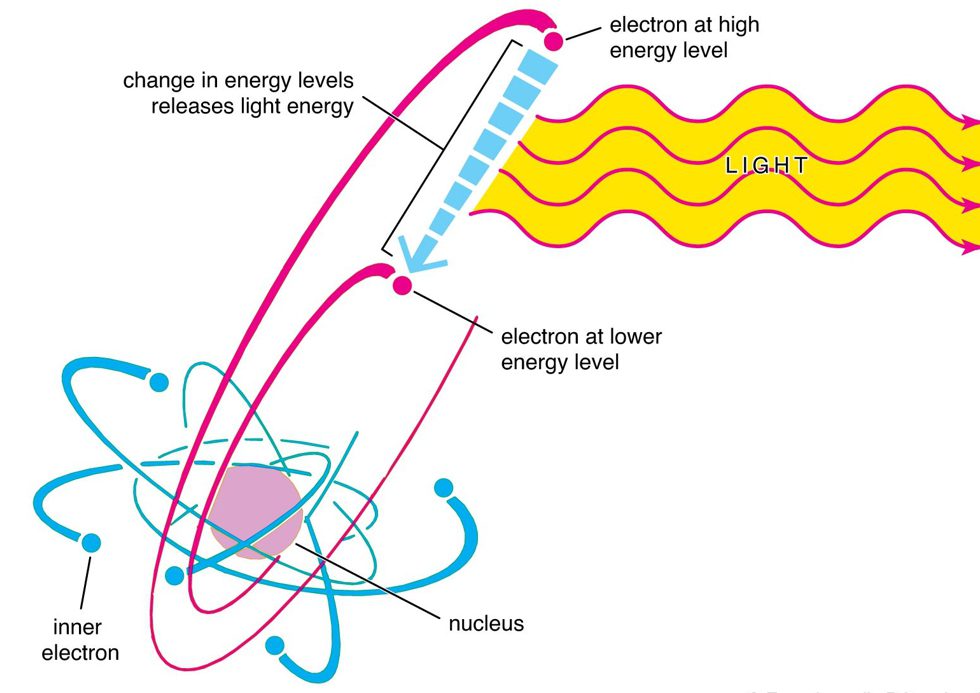
Crystal Field Theory (CFT) explains how colour arises when light interacts with the electrons of transition-metal ions.
In simple terms:
-
The crystal structure splits the electron energy levels of the impurity atoms.
-
When light hits the gem, electrons absorb certain wavelengths to jump to higher energy levels.
-
The remaining wavelengths create the colour we see.
For example:
-
Chromium in ruby absorbs green and blue → we see red.
-
Iron in aquamarine absorbs red → we see blue.
This is why two gemstones with the same impurity (e.g., chromium) can look completely different — the host crystal determines how energy levels split.
3. Charge Transfer Mechanisms
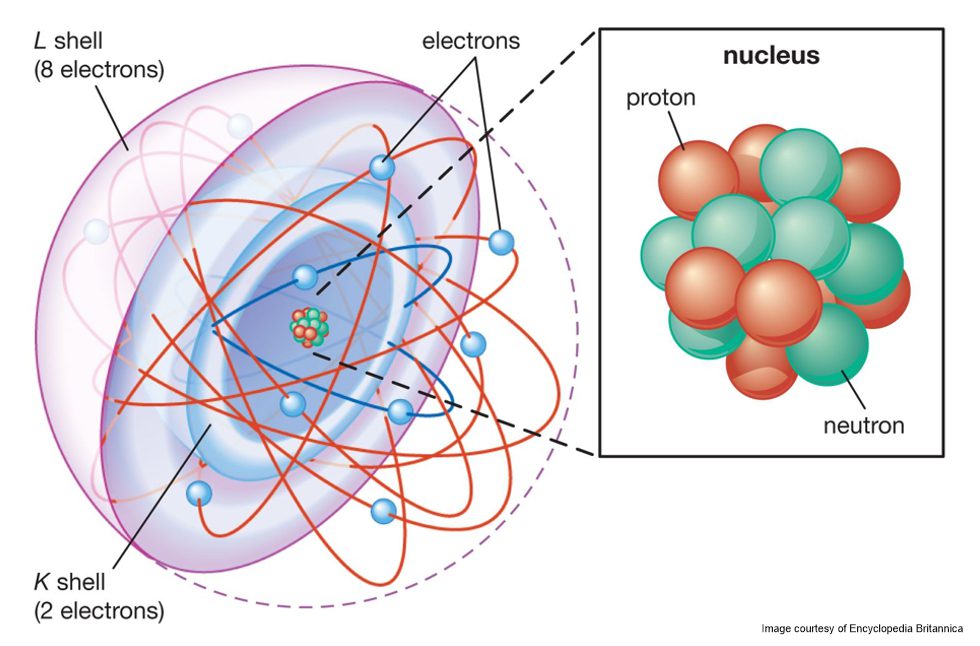
Crystal Field Theory (CFT) explains how colour arises when light interacts with the electrons of transition-metal ions.
In simple terms:
-
The crystal structure splits the electron energy levels of the impurity atoms.
-
When light hits the gem, electrons absorb certain wavelengths to jump to higher energy levels.
-
The remaining wavelengths create the colour we see.
For example:
-
Chromium in ruby absorbs green and blue → we see red.
-
Iron in aquamarine absorbs red → we see blue.
This is why two gemstones with the same impurity (e.g., chromium) can look completely different — the host crystal determines how energy levels split.
4. Crystal Defects: When Imperfections Create Colour
Natural crystals are never perfect. Missing atoms, displaced atoms, radiation exposure, or trapped gases can dramatically alter colour.
Colour Centres
Colour centres are defects where electrons are trapped in the crystal lattice. They absorb particular wavelengths of light.
Examples:
-
Blue topaz → Colour created artificially through radiation
-
Smoky quartz → Natural radiation creates aluminium defects
-
Irradiated diamonds → Green colour from vacancy clusters
Radiation Damage
Radioactive elements like uranium can alter the colour of surrounding minerals over millions of years.
For instance:
-
Green diamond (natural)
-
Smoky quartz
-
Heliodor
Structural Distortion
Distortions in crystal symmetry also affect colour:
-
Alexandrite effect → Caused by chromium in a distorted chrysoberyl structure
-
Chatoyancy & asterism → Technically not colours, but light phenomena from structural inclusions
5. Element Substitution: How Crystals “Swap” Atoms
Crystals are surprisingly tolerant of chemical substitutions. If an atom is the right size and charge, it can replace another atom in the structure.
Examples:
-
Mn replaces Fe in garnet → Produces vivid orange spessartite
-
Cr replaces Al in corundum → Ruby
-
Fe replaces Mg in olivine → Colour shifts from green to brownish tones
These substitutions alter the gemstone’s absorption spectrum and therefore its colour.
6. Light Scattering & Structural Effects (Non-Chemical Colour)
Some colours do not come from chemistry at all.
Opalescence (Opal)
Caused by microscopic silica spheres diffracting light.
Labradorescence (Labradorite)
Caused by lamellar twinning within the feldspar.
Iridescence (Ammolite, Pearl)
Caused by layered structures scattering light like oil on water.
These structural colours often shift dramatically with movement and angle.
7. Colour Zoning: Why Some Stones Show Multiple Colours
Many gemstones show colour banding or zoning because conditions changed during growth.
Examples:
-
Amethyst → Purple bands
-
Sapphire → Blue core, colourless outer layer
-
Tourmaline → Watermelon (pink core, green rim)
Zoning occurs because trace-element concentration fluctuates while the crystal is forming.
8. Why Different Gems Show the “Same” Colour Differently
A chromium-rich ruby and a chromium-rich emerald look nothing alike. Why?
Because colour depends not only on the impurity itself, but on:
-
The host crystal’s structure
-
Refractive index
-
Electron energy-level splitting
-
Trace-element companions
-
Light interaction patterns
Thus, identical atoms can create radically different colours depending on their environment.
Conclusion: Gemstone Colour Is Science, Not Mystery
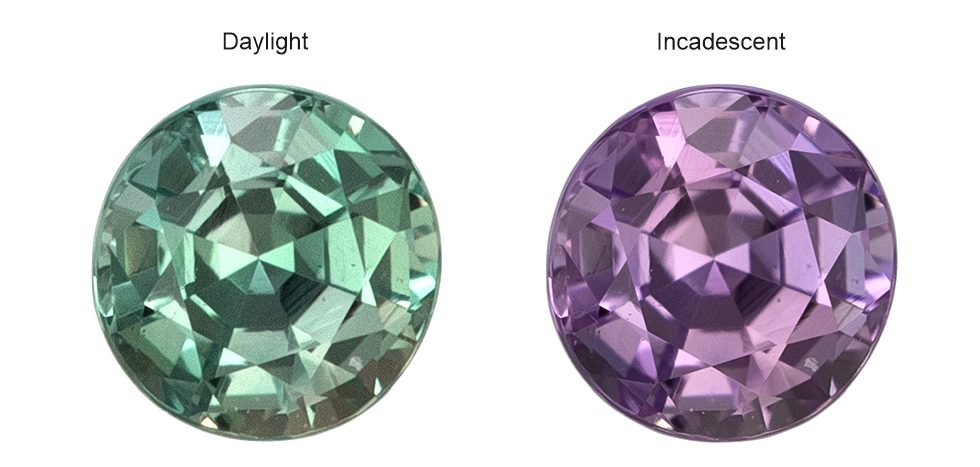
Colour in gemstones results from a sophisticated mix of chemistry, physics, crystal structure, and geological history.
Understanding these factors not only deepens your appreciation but empowers you to evaluate gemstones with greater accuracy and confidence — whether you’re buying, collecting, cutting, or studying them.
Frequently Asked Questions (FAQ)
What is the main factor that determines gemstone colour?
The key factors are trace elements, crystal structure, charge transfers, and crystal defects that absorb specific wavelengths of light.
Can the same element create different colours in different gemstones?
Yes. Chromium makes ruby red but emerald green because the crystal host affects how light is absorbed.
What causes blue in sapphire?
A charge transfer between iron (Fe²⁺) and titanium (Ti⁴⁺) creates a strong, saturated blue.
Why are some gemstones multicoloured or zoned?
Colour zoning happens when trace-element concentrations change during the crystal’s growth.
What is a colour centre?
It’s a crystal defect where electrons get trapped, altering the gemstone’s ability to absorb light.
Are irradiated gemstones safe?
Yes. Commercial gemstone irradiation is controlled and stones are tested to ensure there is no residual radioactivity.
Do synthetic gemstones have the same colour behaviour as natural ones?
Often yes, but their colour may be more uniform due to controlled growth conditions.
What gives Paraíba tourmaline its neon glow?
Copper (Cu²⁺) combined with manganese creates the famous electric blue-green colour.
Does heat treatment change a gemstone’s chemical structure?
Heat alters valence states (e.g., Fe³⁺ → Fe²⁺) or removes colour centres, affecting the absorption spectrum.
Why do gemstones look different under various lights?
Different lighting sources have different wavelength distributions. Stones rich in chromium or vanadium are especially sensitive to lighting shifts.