



 1st - Gold

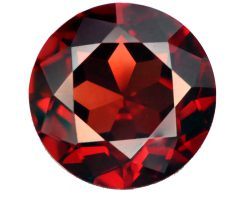 January
 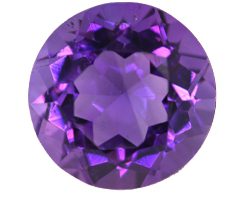 February
 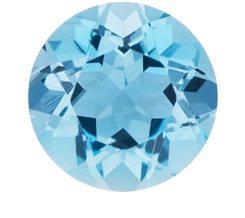 March
March 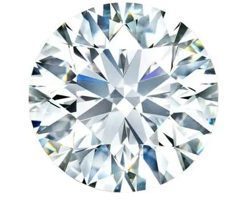 April
April 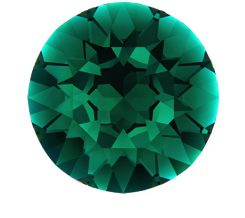 May
May 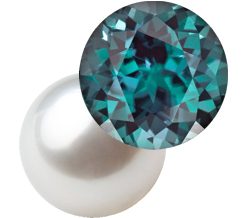 June
June 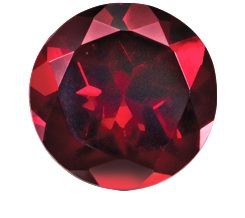 July
July 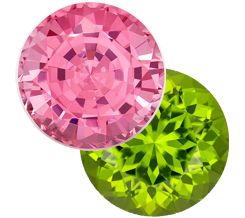 August
 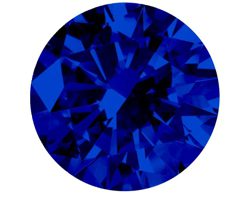 September
 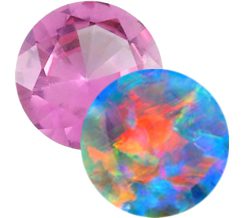 October
 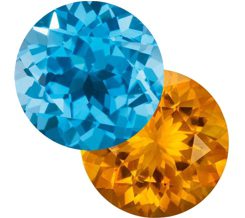 November
 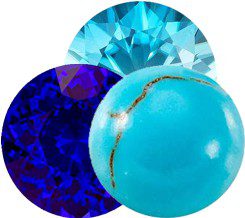 December
 Capricorn - Garnet
  Aquarius - Amethyst
  Pisces - Aquamarine
  Aries - Diamond
  Taurus - Emerald
  Gemini - Pearl
  Cancer - Ruby
  Leo - Peridot
  Virgo - Blue Sapphire
  Libra - Opal
  Scorpio - Topaz
  Sagittarius - Tanzanite


Sugilite Gemstones – Properties, Origins, Treatments and Buying Guide
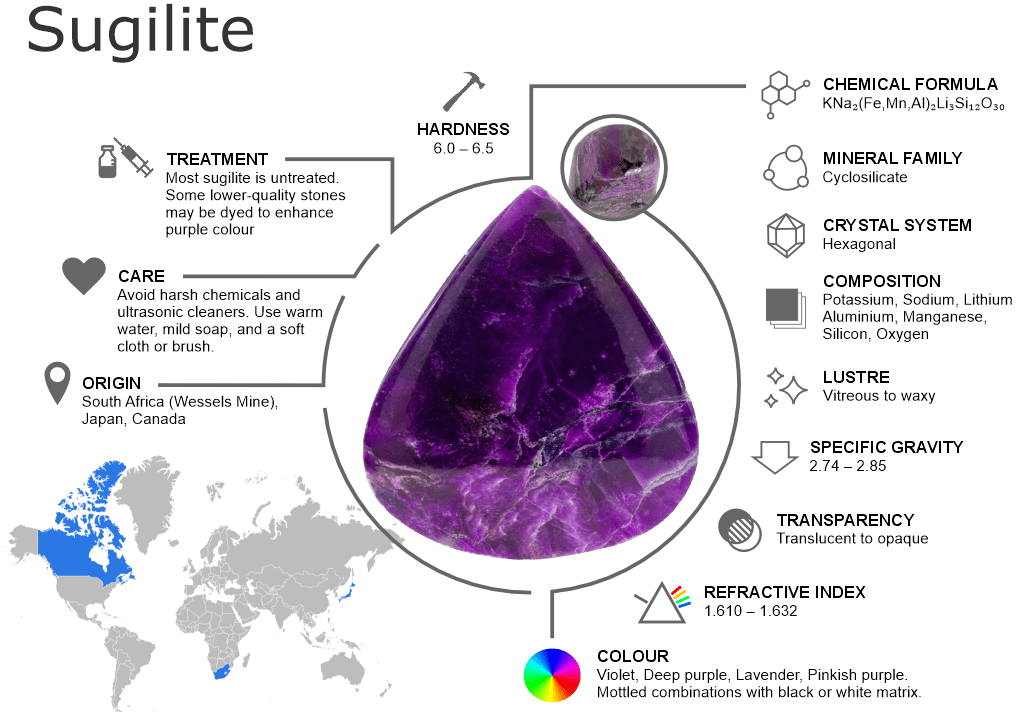
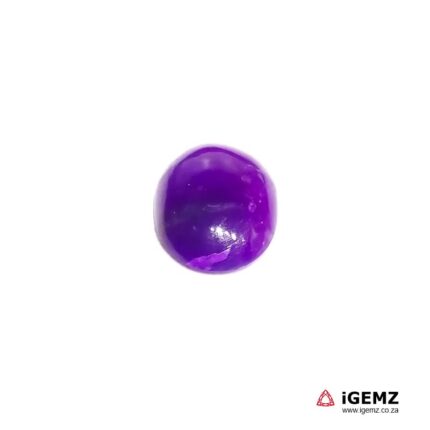
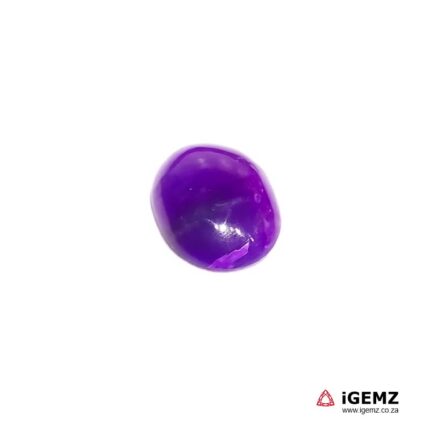
Sugilite is a striking and rare purple gemstone highly prized for its rich violet hues and opaque translucency. Unlike brightly faceted transparent stones, sugilite is valued for its uniform colour, smooth polish, and use in statement jewellery and carvings.
In this guide we examine sugilite from a professional gemmological and commercial perspective, covering its mineral composition, crystal structure, treatments, origins, and how to identify high-quality stones.
What is Sugilite?
Sugilite is a rare cyclosilicate mineral primarily composed of potassium, sodium, lithium, aluminium, manganese, and silicate. It forms in massive, opaque nodules and occasionally as small crystalline aggregates. Its intense violet to purple colours and smooth texture make it ideal for cabochons, beads, and ornamental carvings.
Mineral Composition
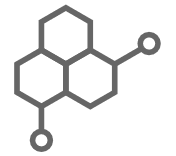
Sugilite has the chemical formula:
KNa₂(Fe,Mn,Al)₂Li₃Si₁₂O₃₀
It is composed primarily of:
Potassium
Sodium
Lithium
Aluminium
Manganese
Silicon
Oxygen
The intensity of violet colour depends mainly on the manganese content; higher manganese produces richer purples.
Mineral Family and Crystal System

Sugilite belongs to the cyclosilicate mineral family, which also includes beryl and tourmaline.
Its crystal system is hexagonal, though gem-quality stones are usually massive and opaque rather than well-formed crystals.
Optical and Physical Properties
Sugilite is opaque to translucent, with a smooth polish and vivid violet colour. It has moderate lustre and is usually cut en cabochon for jewellery.

Lustre
Vitreous to waxy, giving a smooth, polished finish.

Transparency
Translucent to opaque; gem-quality is uniformly coloured.

Refractive index
1.610 – 1.632, providing moderate brilliance in polished cabochons.

Specific gravity
2.74 – 2.85, typical for cyclosilicates.
Colour Range
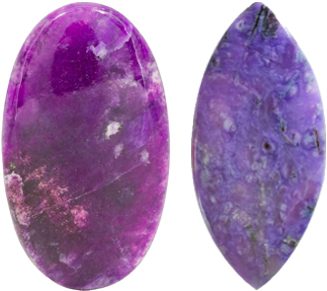
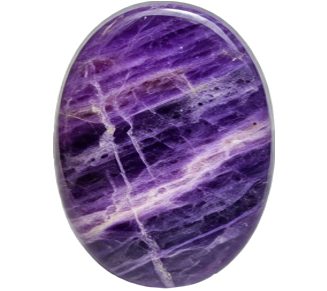
Sugilite occurs in shades of:
Violet
Deep purple
Lavender
Pinkish purple
Mottled combinations with black or white matrix
The finest stones are intense, uniform purple without matrix inclusions.
Mohs Hardness and Durability

Sugilite has a Mohs hardness of 6 – 6.5. It is moderately durable but can chip if struck sharply, making cabochon cuts the preferred jewellery form.
Treatments

Most sugilite is untreated. Some lower-quality stones may be dyed to enhance purple colour, but natural, uniformly coloured sugilite commands the highest value.
Care and Cleaning
Avoid ultrasonic cleaners and harsh chemicals.
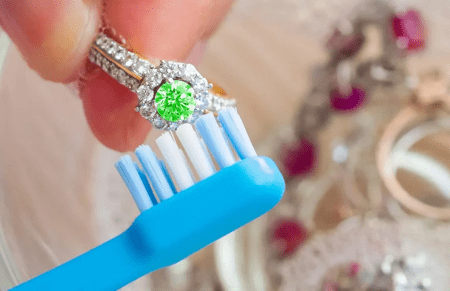
Clean with warm water, mild soap, and a soft brush.
Store sugilite separately from harder stones to prevent scratches.
Major Origins
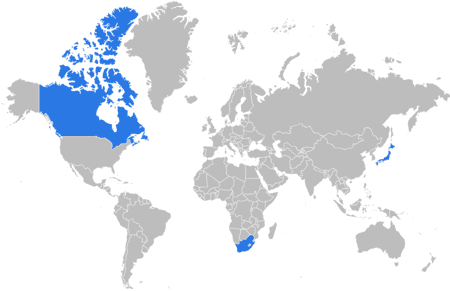
Major sources of sugilite include:
South Africa (Wessels Mine)
Japan
Canada
South African material is considered the highest quality and most vibrant.
Frequently Asked Questions
Is sugilite a natural gemstone?
Yes, sugilite is naturally occurring.
What gives sugilite its purple colour?
Manganese content gives sugilite its violet to purple hues.
Is sugilite treated?
Most sugilite is untreated; low-quality stones may be dyed.
Is sugilite suitable for daily wear?
With a hardness of 6–6.5, sugilite is suitable for occasional jewellery.
Can sugilite be scratched easily?
Yes, it is softer than quartz and can chip or scratch.
How can I identify real sugilite?
Look for uniform violet colour, waxy to vitreous lustre, and cabochon polish.
Where does the best sugilite come from?
South Africa (Wessels Mine) produces the finest and most vivid material.
Is sugilite opaque or transparent?
Sugilite is usually opaque to translucent.
Can sugilite be carved?
Yes, massive stones are ideal for beads, cabochons, and ornamental carvings.
Does sugilite fade in sunlight?
Natural sugilite is generally colour stable but avoid prolonged exposure to strong sunlight.