


 1st - Gold


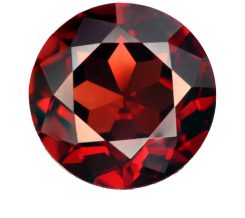 January
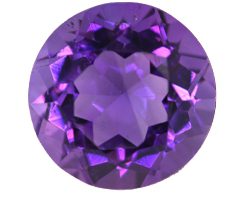 February
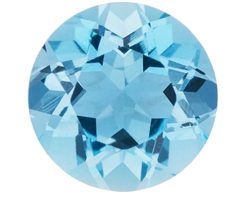 March
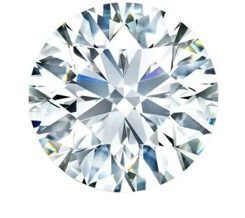 April
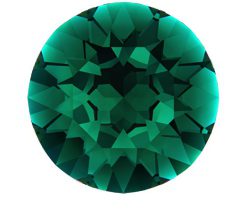 May
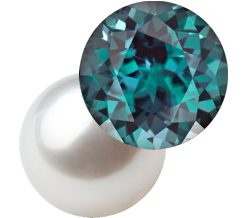 June
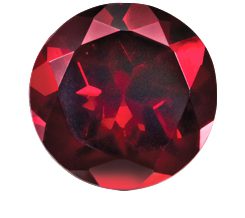 July
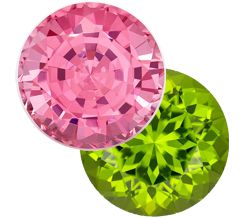 August
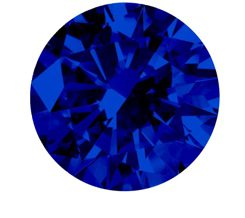 September
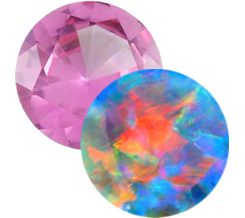 October
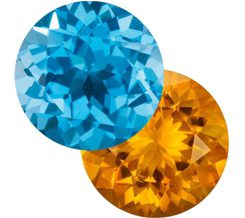 November
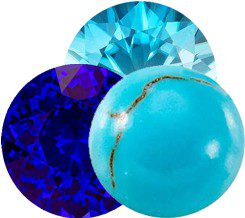 December

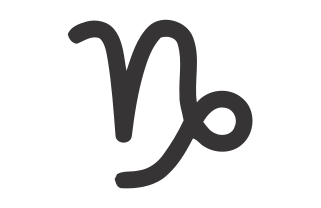 Capricorn - Garnet
 Aquarius - Amethyst
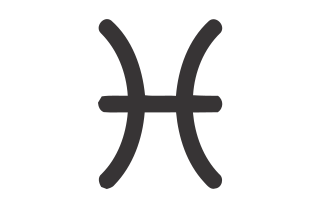 Pisces - Aquamarine
 Aries - Diamond
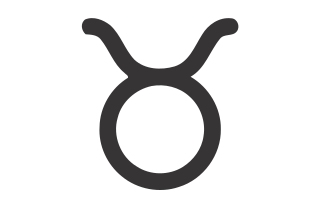 Taurus - Emerald
 Gemini - Pearl
 Cancer - Ruby
 Leo - Peridot
 Virgo - Blue Sapphire
 Libra - Opal
 Scorpio - Topaz
 Sagittarius - Tanzanite



Why a Gemstone Replacement May Need More Than the Original Receipt
Gemstone Journal · 10 min read
When replacing a gemstone, many assume the original receipt holds all the necessary details. Yet, replacement gemstone information comprises far more: precise design measurements, details of the original item’s setting, and specific characteristics that affect fit and appearance. For those buying loose faceted gemstones, particularly online, having comprehensive, accurate data is essential to ensure the new stone fits perfectly and retains the jewellery’s intended look. This article explains practical considerations and guides buyers on what to collect and communicate beyond just a receipt.
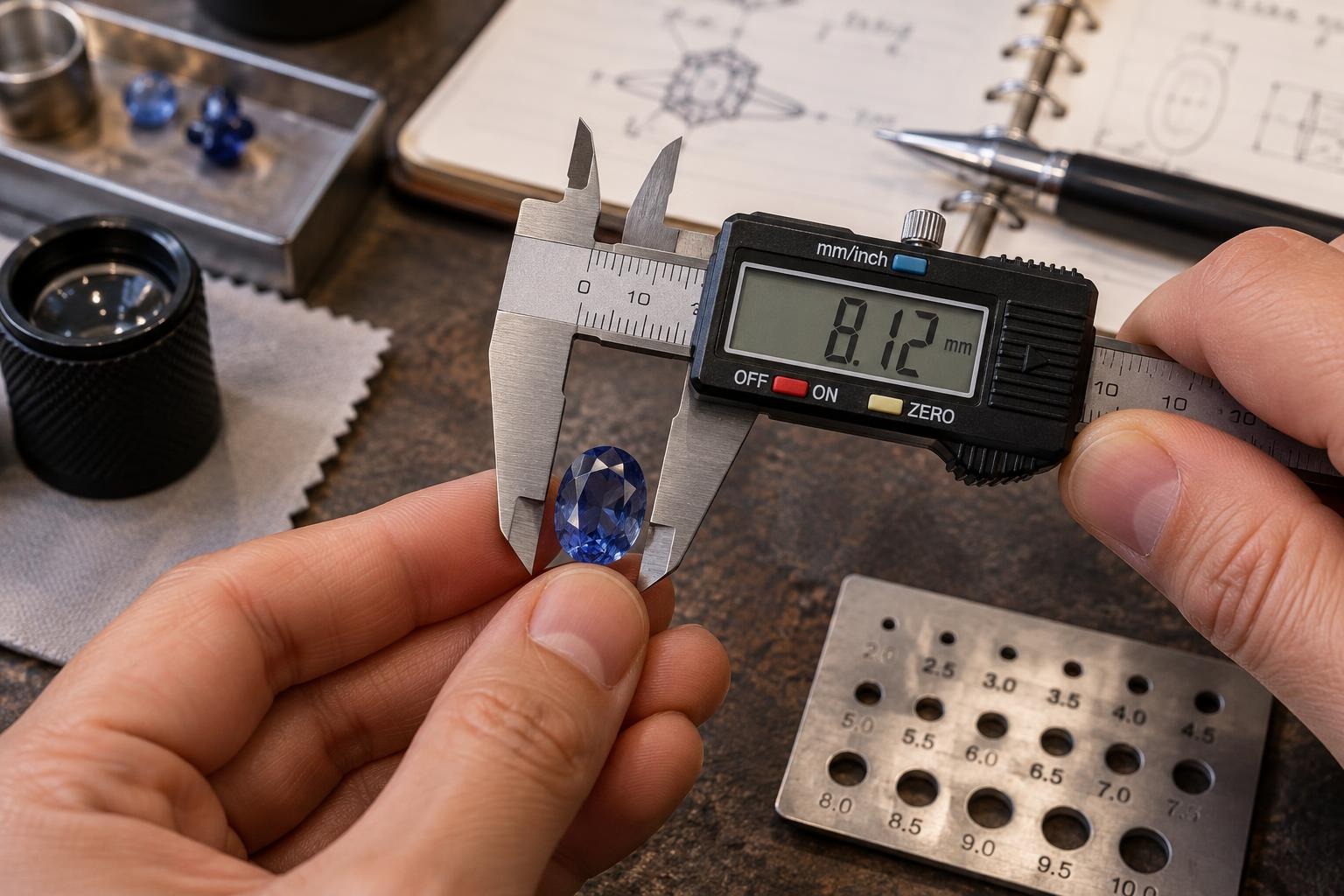
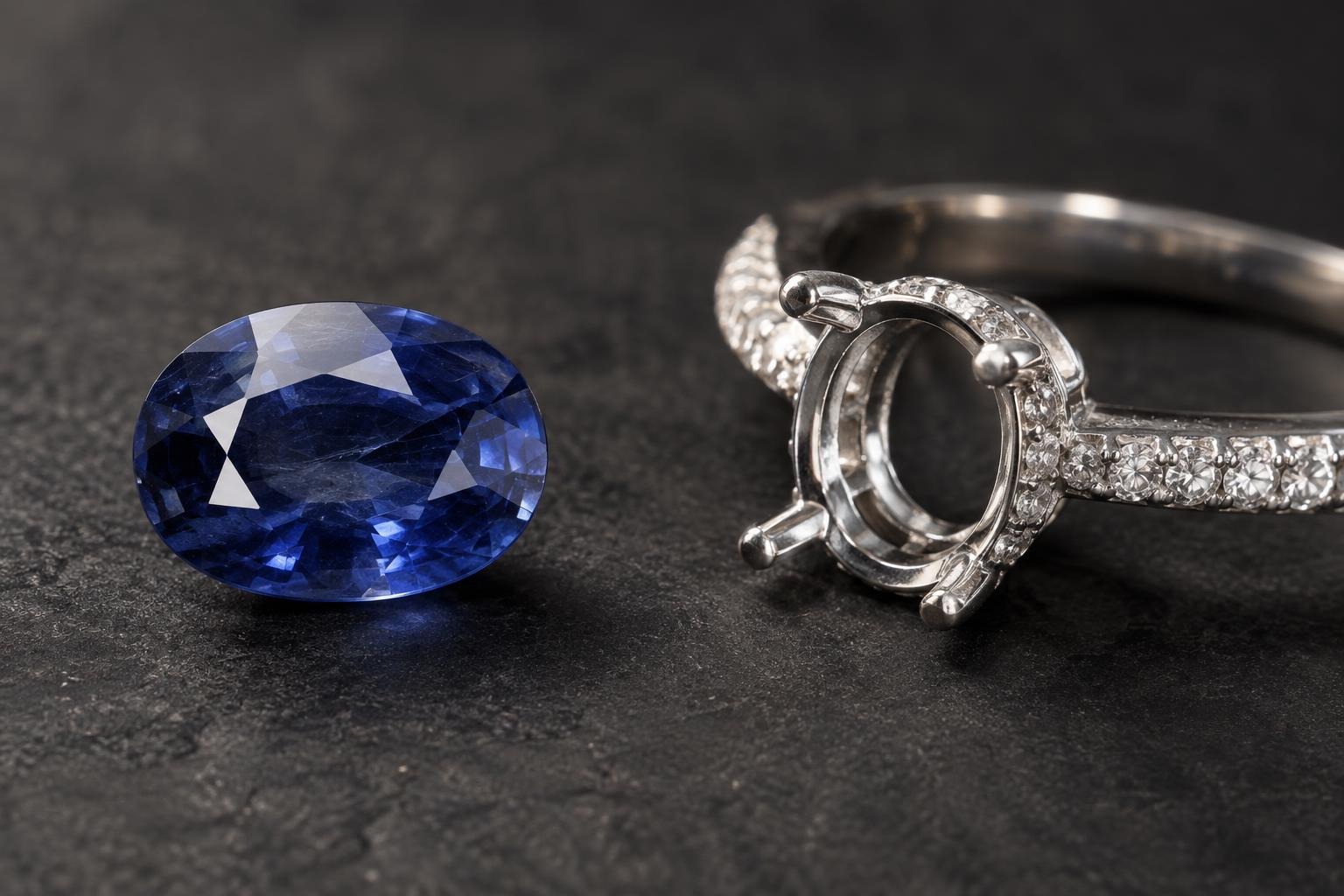
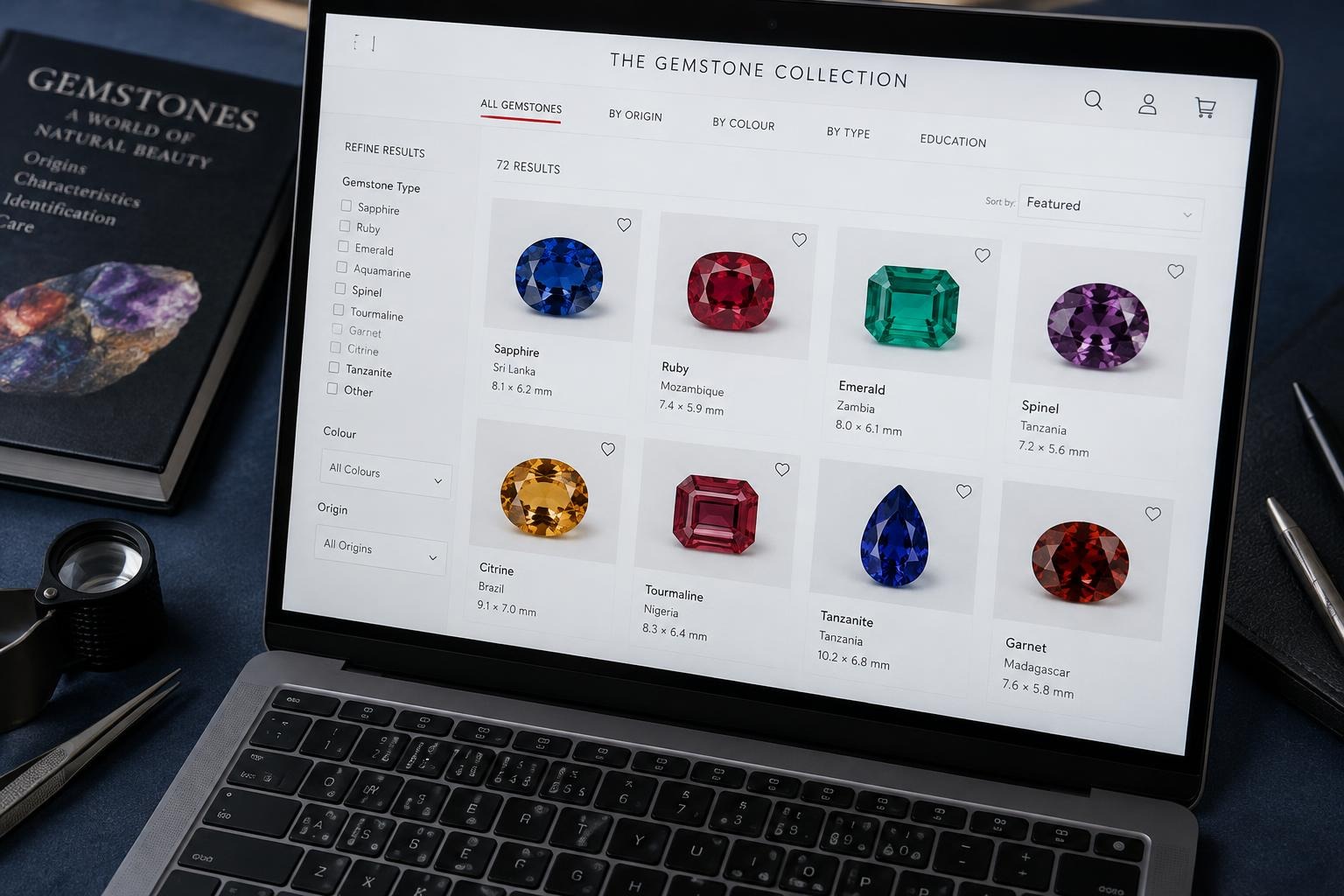
The image is for illustration purposes and is not an actual stock item.
The Limitations of Relying Solely on the Original Receipt
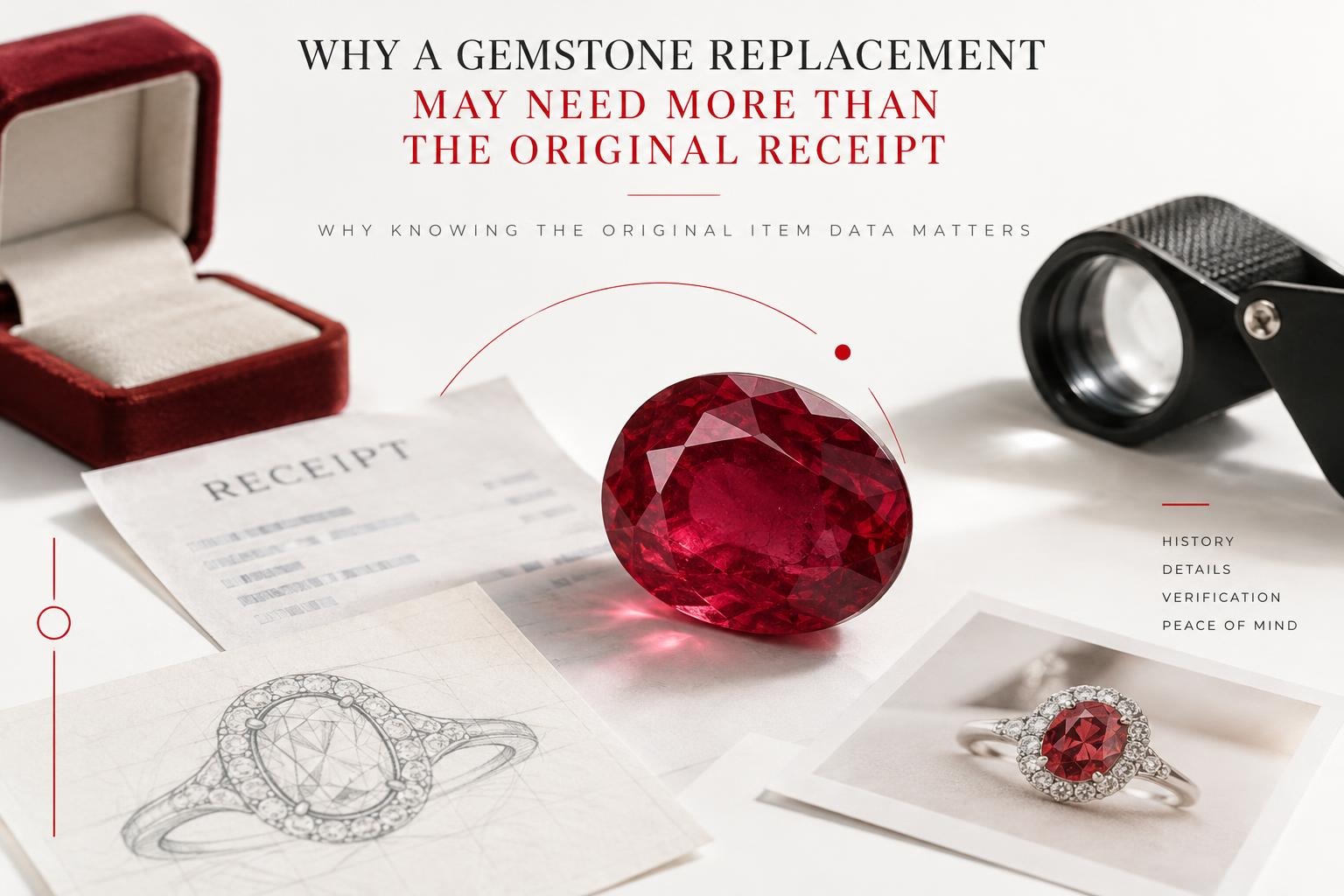
The original receipt for a gemstone purchase typically provides basic transaction details: carat weight, species or variety name, purchase date, and sometimes price. While useful for proof of ownership or basic record-keeping, it rarely includes technical data vital for replacement. Design changes during jewellery manufacture and settings can alter required dimensions. Gemstones may be resized, recut, or repositioned, meaning the stone in the final piece may differ subtly from that described on its original receipt. Furthermore, receipts usually don't indicate factors such as exact measurements in millimetres, cut style, or colour tone nuances that influence matching accuracy. Thus, when seeking replacement gemstone information, relying solely on receipts risks fit problems and unexpected appearance differences in the replacement stone.
Understanding the Importance of Current Design Measurements
Current design measurements form the backbone of effective replacement information. These include the exact dimensions of the gemstone in the jewellery—length, width, depth in millimetres—and sometimes the stone’s profile or pavilion angles. Such details ensure the new loose faceted gemstone can be securely and attractively set without modification to the setting or risk of damage. Since settings may constrain available space or require specific thicknesses, measurements taken from the original mounted stone or by jewellers from the existing setting are more reliable than prior data on the receipt. Collecting up-to-date measurements allows manufacturers or jewellers to select or cut a replacement that respects the original design’s integrity and comfort.
Why Knowing the Original Item Data Matters
Original item data denotes the contextual information about the jewellery piece housing the gemstone. This includes the type of setting (prong, bezel, channel, etc.), metal type, mounting depth, and surrounding stones or design elements. This context shapes replacement choices: for example, a bezel setting requires tighter fitting of the gemstone edges than a prong setting. The setting’s shape and size can limit the acceptable variation in replacement stone dimensions. Moreover, knowing original item data helps prevent incompatible selections that might force costly setting remakes or result in insecure settings. Such data clarifies the practical boundaries within which replacement gemstones must fit and perform aesthetically.
The Role of Carat Weight Versus Millimetre Size in Replacement Selection
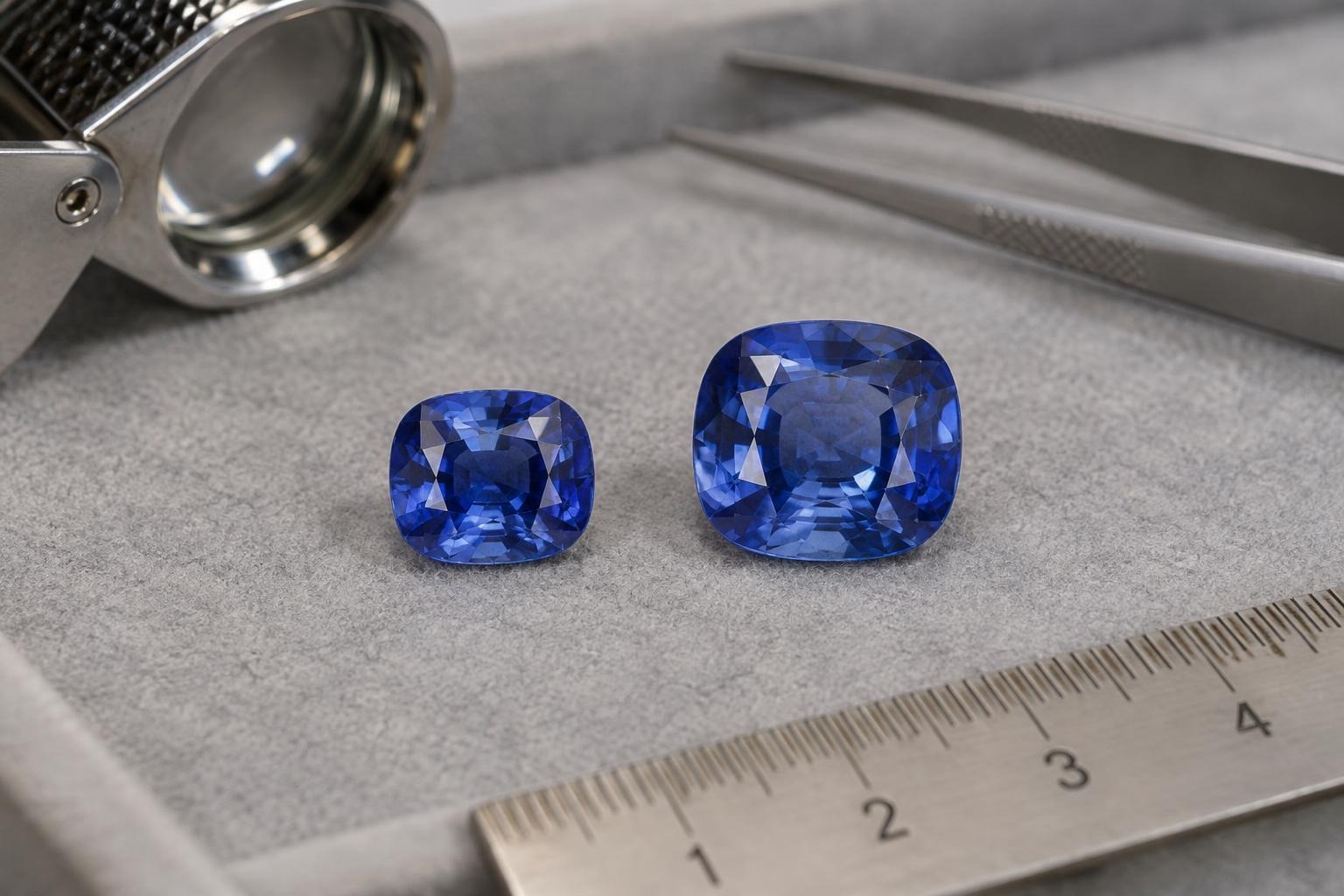
While carat weight is often highlighted on receipts, it is not a direct substitute for size in millimetres when selecting replacements. Carat reflects gemstone mass but the size perceived by the setting depends on shape and cut proportions. For instance, two gemstones of equal carat weight can have substantially different width and depth measurements, especially comparing shapes like round brilliant versus emerald cut. Therefore, relying solely on carat weight can mislead replacement purchases, causing fit issues or mismatched appearance. Accurate millimetre measurements are more reliable for practical replacement matches, affirming why comprehensive replacement gemstone information should always include these precise dimensions.
Practical Examples: When Replacement Requires More Than the Receipt
Consider a sapphire ring where the original receipt states ‘2.5 carat blue sapphire’. The ring setting may have required the stone to be recut slightly smaller for security, altering dimensions from the original. Without updated millimetre measurements, a replacement sapphire bought using receipt info might not fit the bezel correctly or could leave gaps exposing the setting. Another scenario is an oval-cut gemstone whose length-to-width ratio was customised during setting. The receipt alone won’t reflect that ratio. Selecting a replacement without this will create a visible mismatch, detracting from the jewellery’s appearance. These examples illustrate that replacement gemstone information must include more than transactional data to ensure a seamless match.
Distinguishing Documented Facts From Illustrative Scenarios
It is important to distinguish documented facts about gemstone replacement and its requirements from illustrative examples or hypothetical scenarios. The technical necessity for current design measurements and original item data is grounded in professional gemmological practice and jeweller expertise. In contrast, scenarios describing specific gemstones or settings serve only to demonstrate why these details matter. Buyers should treat examples as educational guides, not as guarantees of what every replacement situation entails. Real replacements depend on the unique demanding factors of each stone and setting, which professional jewellers can best evaluate.
Beyond basic size and setting information, it is also important to consider variations in the gem’s cut proportions which can subtly influence the replacement’s optical performance and visual harmony within the jewellery piece. For example, factors such as table size, crown height, and pavilion depth affect how light interacts with the gemstone and thus its brilliance and fire. Although these details are seldom documented on receipts, sharing any available cut proportions with the gemstone supplier can help select a stone that matches the original’s visual character more closely, particularly for prominent centre stones.
Another practical consideration is the gemstone’s shape tolerance—the acceptable range within which the new stone’s dimensions can vary without compromising fit or aesthetics. Some settings and designs can accommodate small differences, while others, such as tight bezels or channel mounts, may require precision within a fraction of a millimetre. Consulting a professional jeweller to define these tolerances alongside measurements can prevent ordering a replacement that is slightly off and subsequently requires expensive setting alterations or returns.
It is also useful to record any asymmetry or special features in the replaced gemstone’s cut or shape. Stones that are not perfectly symmetrical or that have non-standard facet arrangements require matching replacements to avoid noticeable discrepancies. This is especially relevant for fancy shapes like pear or marquise cuts, where length-to-width ratios and pointed or rounded ends vary considerably. Collecting such nuanced replacement gemstone information is essential for maintaining design coherence.
Moreover, understanding the setting’s method of stone retention is relevant beyond just size. For instance, prong settings may tolerate slight dimension variations due to the flexibility of the prongs, whereas clasp or bezel settings have fixed limits. Identifying these constraints when gathering replacement gemstone information aids both in selecting suitable stones and communicating requirements clearly to suppliers and jewellers.
Finally, while receipts do not cover treatment status or origin, buyers should be aware that these factors can influence the stone’s durability and appearance in subtle ways. Although not part of replacement gemstone information needed for physical fit, sharing any known treatment details or certification references with the seller can ensure the replacement matches key visual or quality aspects, supporting satisfaction with the final result.
What’s Missing if You Only Have the Receipt
Without additional replacement gemstone information beyond the receipt, several key details are often missing: exact size in millimetres, cut style particulars, bevel angles, and the precise fit requirements of the jewellery’s setting. There is also no indication if the original stone was modified for design reasons. Some receipts omit variety or species clarity, making direct substitution impossible. This absence of detailed information increases the likelihood of ordering an incompatible loose faceted gemstone, resulting in fitting delays, increased costs, or compromised aesthetic harmony. Hence, a receipt is a partial record—not a comprehensive guide for replacement.
Another key practical limitation is the potential variability introduced by different measurement tools and techniques. For example, callipers used by various jewellers may have differing calibration standards or precision levels, leading to slight discrepancies in recorded dimensions. Even a deviation of 0.1 to 0.2 millimetres can be significant for tight-fitting settings. Ensuring that measurements are taken with calibrated instruments and, if possible, cross-checked by experienced professionals adds reliability to the replacement gemstone information. This underscores the importance of engaging reputable gemmologists or jewellers who are equipped to provide precise and consistent measurement data.
In addition, replacement gemstone information should ideally include the tolerance for acceptance in each dimension, reflecting the practical flexibility of the setting. Some settings can accommodate slight variations—say, ±0.1 millimetres—without compromising security or appearance, while others demand near-exact matches. For instance, tension settings require extremely precise stone dimensions to prevent slippage or damage. Providing this tolerance window to suppliers helps streamline the search for a suitable loose faceted gemstone, reducing returns or modifications.
It is also instructive to consider the influence of gemstone shape and cutting style beyond size. Cut style variations may affect the stone’s dimensions slightly or alter how it sits in the setting. For example, a step cut (emerald cut) with a large table and low crown might measure differently at the girdle or crown height compared to a brilliant cut of the same carat weight and length/width. These subtle differences impact the replacement’s visual balance and sturdiness once set. Hence, replacement gemstone information that includes cut style and any cut proportion notes enhances the likelihood of maintaining the original jewellery’s aesthetic.
A further practical consideration arises when gemstones have undergone modifications after initial purchase, such as recutting to improve clarity or to correct inclusions. The original receipt will not reflect these changes, as it documents only the initial transaction. Consequently, replacing a gemstone based solely on receipt data can lead to misfit or contrast issues if the replacement does not match the post-modification dimensions. To address this, buyers should document any known recutting or alterations, ideally with supporting measurements, before procurement.
Lastly, when coordinating replacement gemstone information between buyers, suppliers, and jewellers, clear communication and documentation are critical. Exchanging detailed measurements including profile and girdle thickness, cut style, shape ratios, and setting constraints in writing reduces misunderstandings. A standardised format or checklist for providing these details can be particularly helpful, ensuring all parties align on the criteria and diminish the risk of ordering an ill-fitting loose gemstone. This procedural rigor complements the basic receipt and enhances the overall success of a replacement purchase.
How to Collect and Organise the Necessary Replacement Gemstone Information
The best way to prepare for a replacement gemstone purchase is to collect comprehensive data about the original piece and current design. This should be done with the help of a jeweller or gemmologist who can accurately measure the stone in millimetres and document the setting details. Photographs of the jewellery can supplement records but should not replace dimensions. Keeping records of any original certificates that contain cut style or proportion information, if available, is helpful but not mandatory. Organising this data alongside the original receipt provides a more complete replacement gemstone information package, facilitating smooth sourcing of a compatible loose gemstone.
Implications for Buyers of Loose Gemstones Online
For international retail buyers purchasing loose faceted gemstones online, relying on original receipts alone is insufficient. Clear communication of all replacement gemstone information to suppliers is vital to ensure that the new stone will fit their existing jewellery setting. Given that online purchases cannot be tested physically before sale, providing exact millimetre measurements and setting details reduces the risk of ill-fitting stones. Buyers should request professional assistance in gathering this data and carefully confirm all dimensions with the seller. Understanding these needs helps buyers make informed decisions and avoid the frustration of unsuitable replacements.
Your questions, answered
Is the original receipt enough to find a replacement gemstone?
No, the original receipt typically lacks necessary design measurements and setting details needed to select a properly fitting replacement gemstone.
Why are millimetre measurements important for replacement stones?
Millimetre dimensions ensure the replacement gemstone fits securely and matches the original setting’s space, which carat weight alone cannot guarantee.
Can a replacement gemstone differ from the original stone on the receipt?
Yes, stones may be recut or modified to fit settings, so the replacement’s exact size and shape may differ from the original receipt information.
How can I obtain accurate replacement gemstone information?
Work with a jeweller or gemmologist to measure the current stone and document setting details, supplementing the original receipt data.
Are photographs sufficient to select a replacement gemstone?
No, photographs alone cannot provide exact size or fit details needed; precise measurements are essential.
Find a colour that speaks to you.
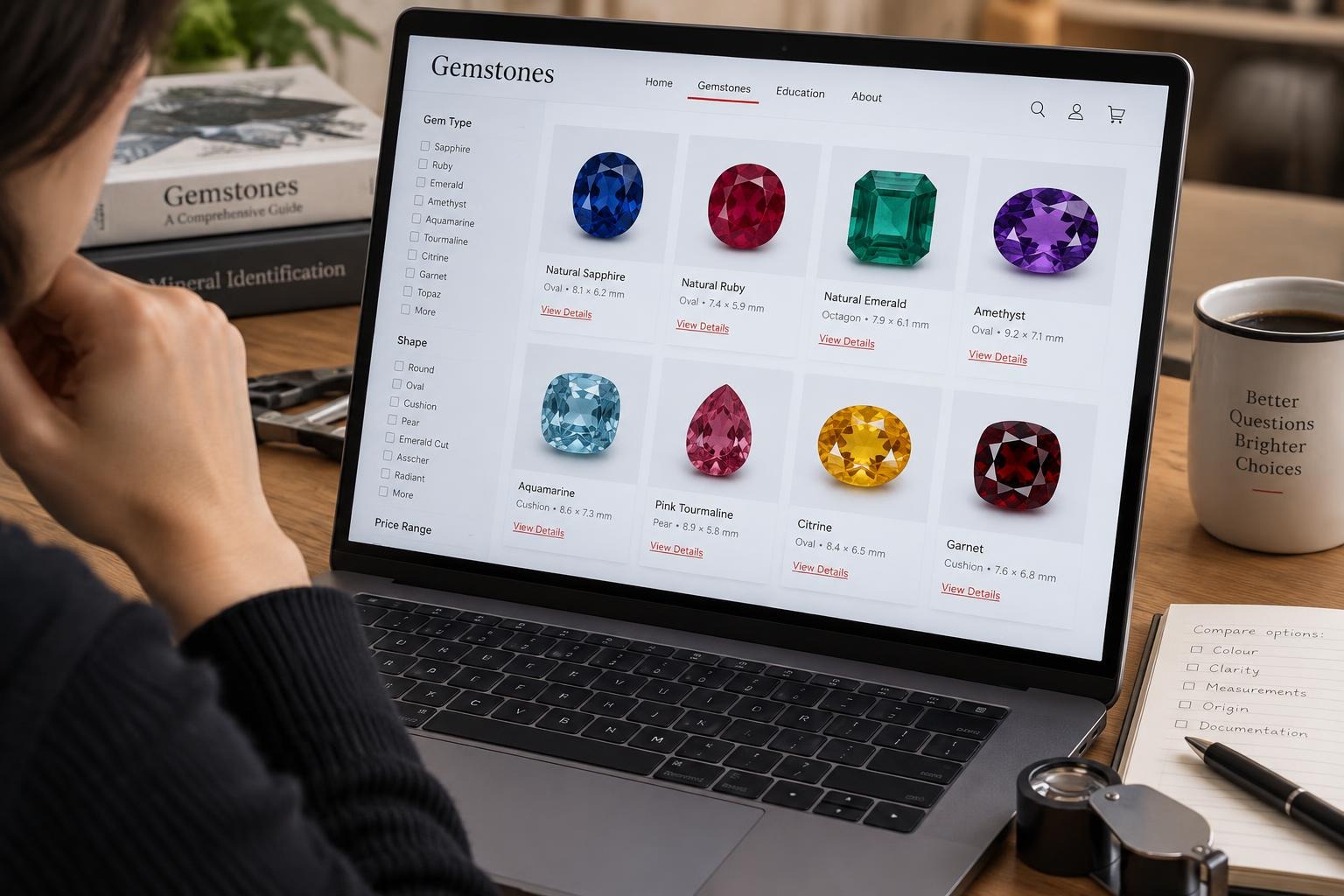
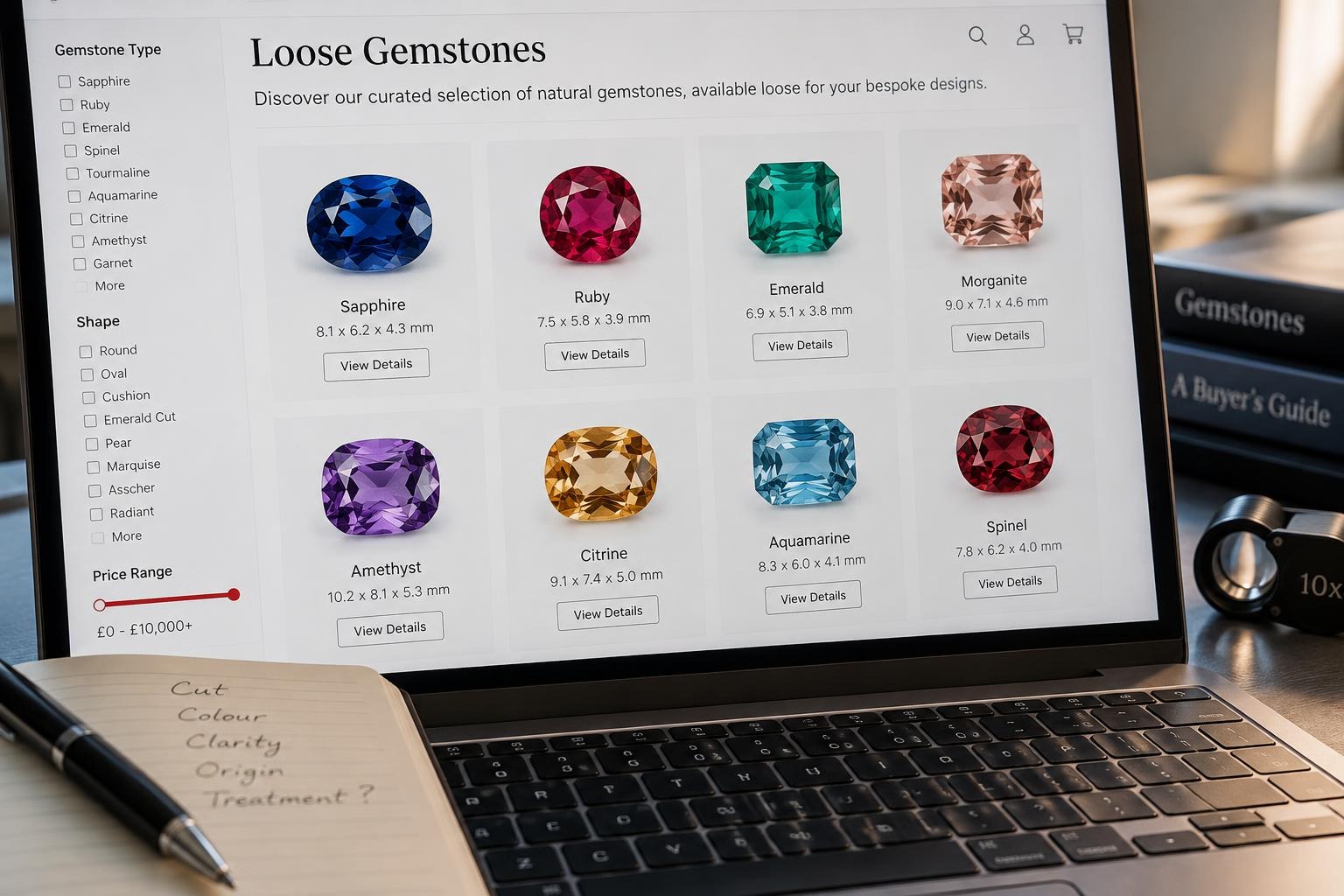
Ready to select a replacement gemstone with full information? Browse our extensive collection of loose gemstones online to find the perfect fit and colour for your jewellery.