

 1st - Gold
 January
 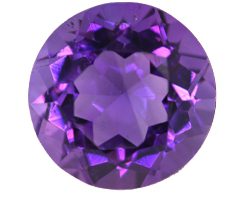 February
 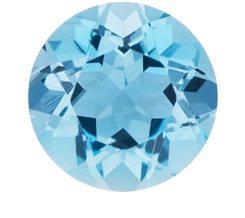 March
March 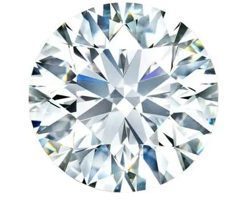 April
April 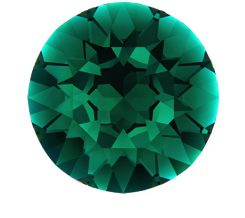 May
May 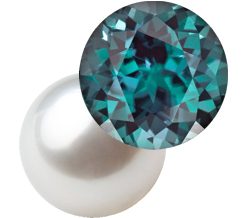 June
June 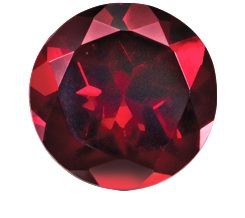 July
July 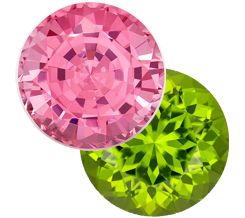 August
 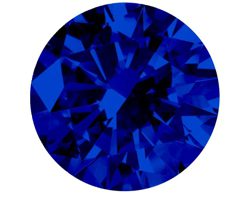 September
 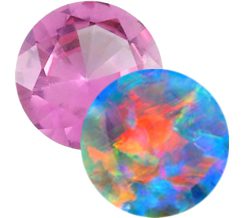 October
 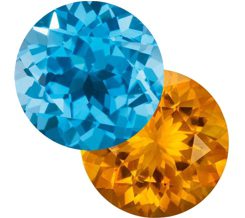 November
 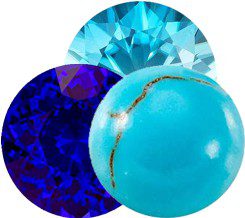 December
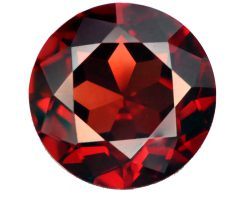
 Capricorn - Garnet
  Aquarius - Amethyst
 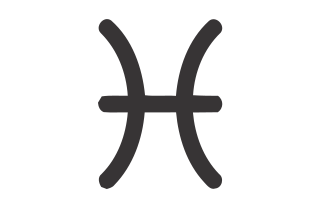 Pisces - Aquamarine
 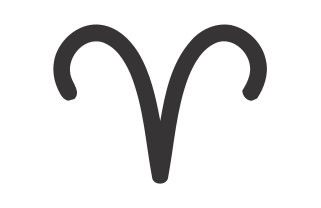 Aries - Diamond
 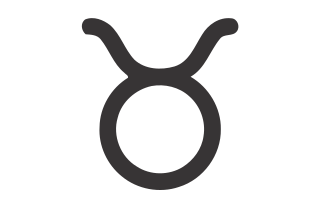 Taurus - Emerald
 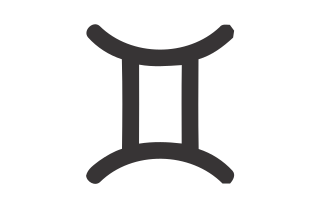 Gemini - Pearl
  Cancer - Ruby
  Leo - Peridot
  Virgo - Blue Sapphire
  Libra - Opal
  Scorpio - Topaz
  Sagittarius - Tanzanite

Peridot Gemstones – Properties, Origins, Treatments and Buying Guide
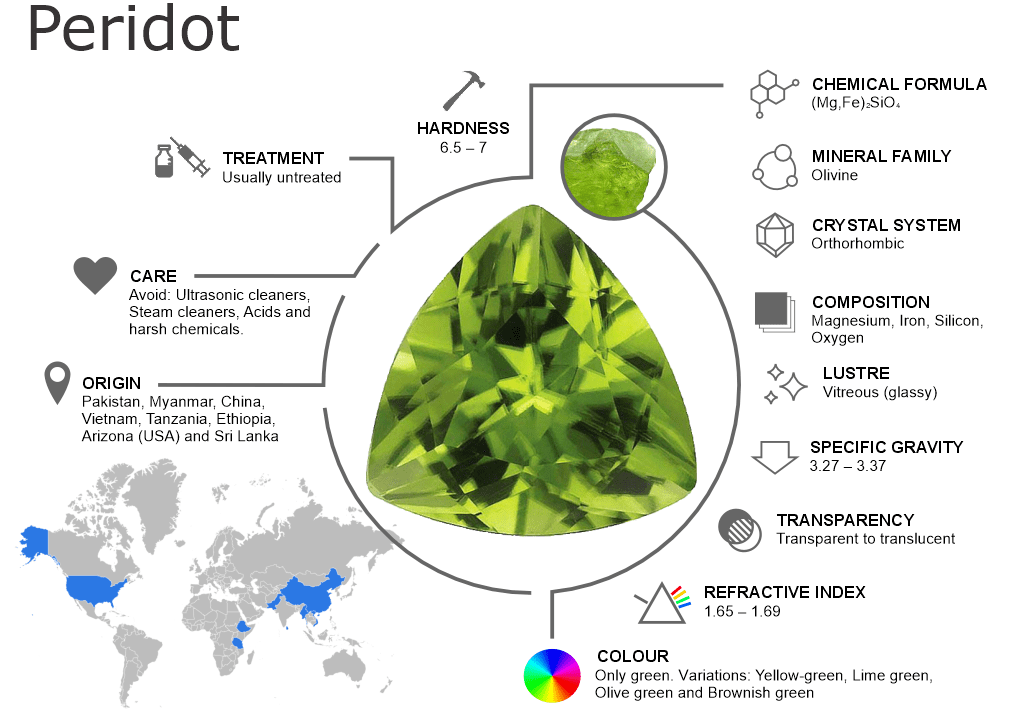
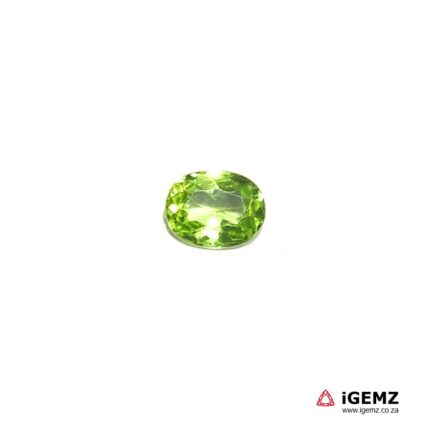
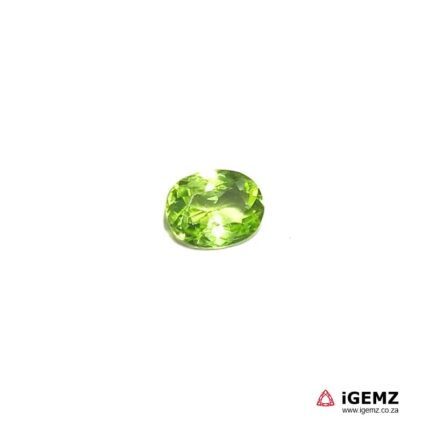
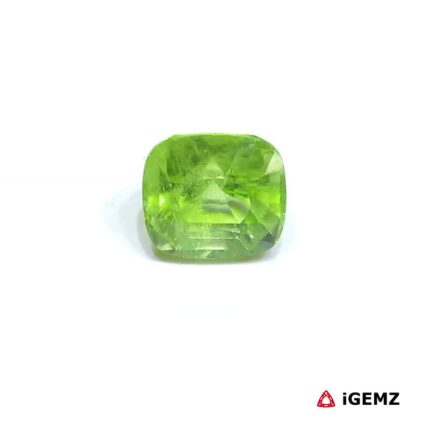
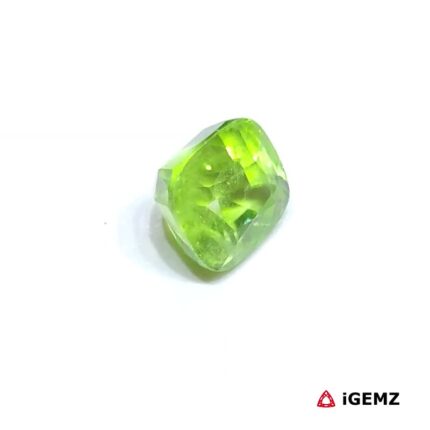
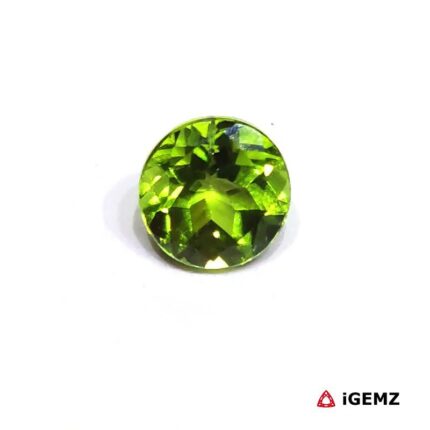
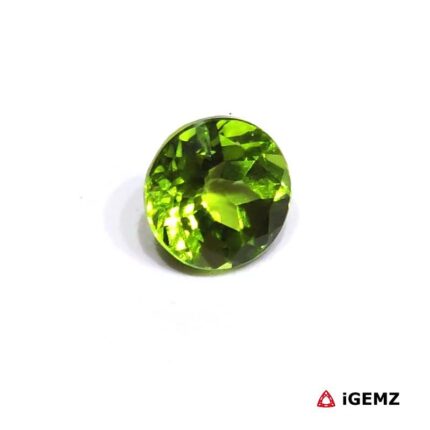
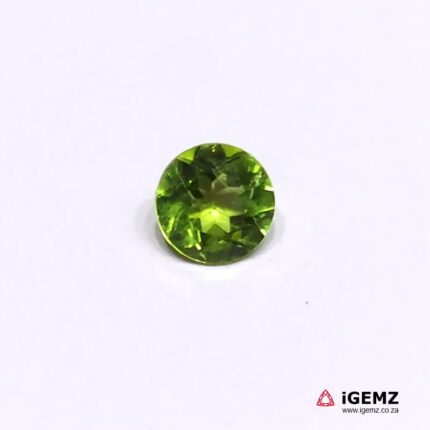
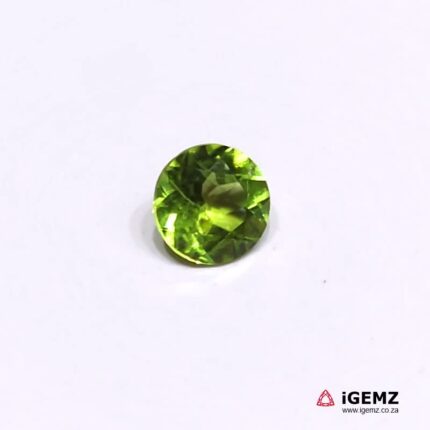
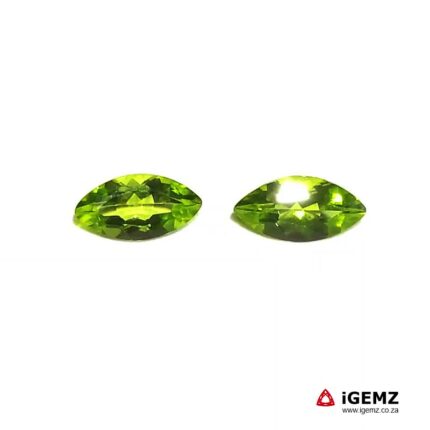
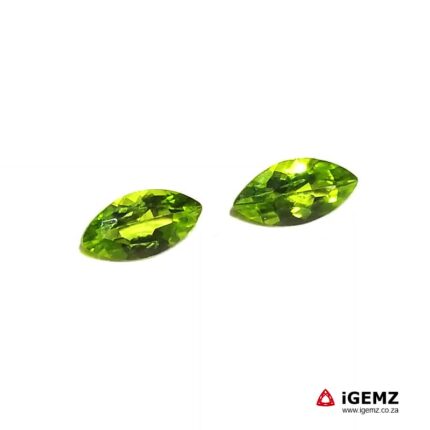
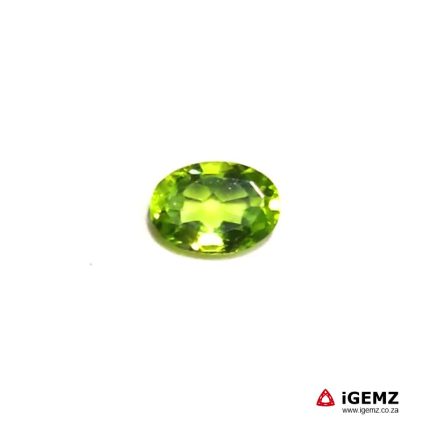
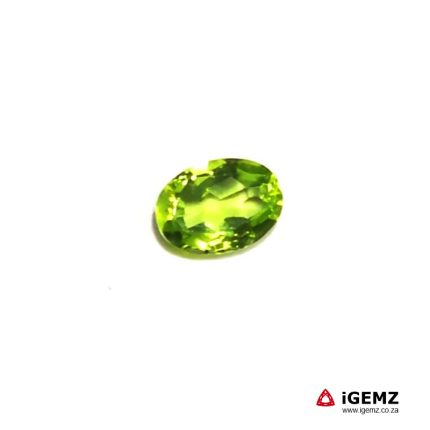
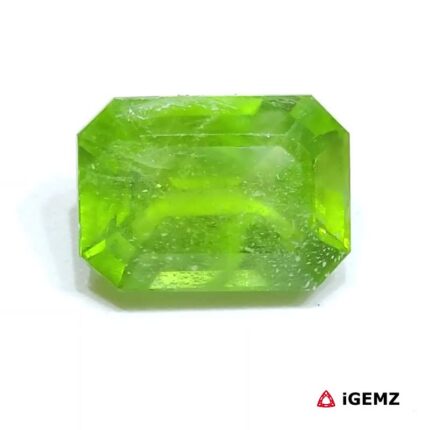
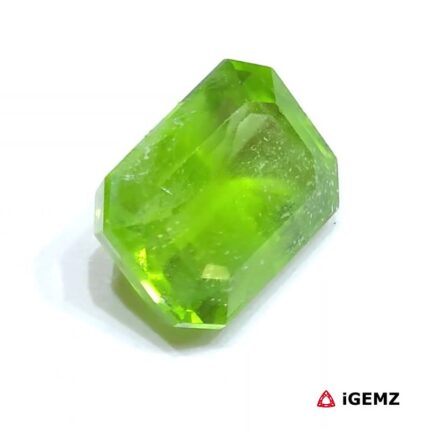
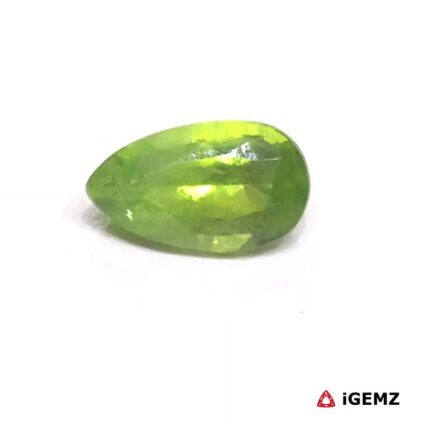
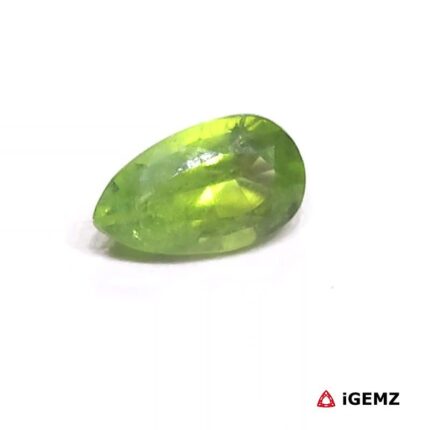
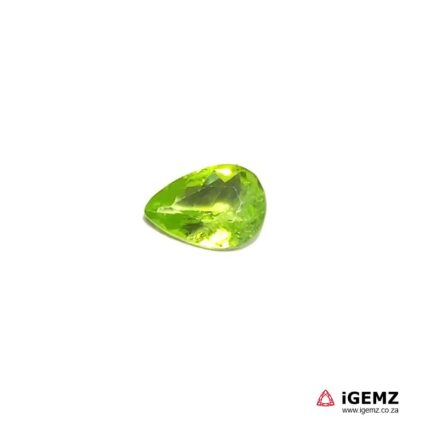
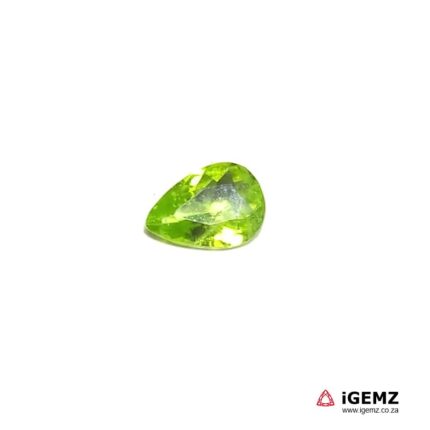
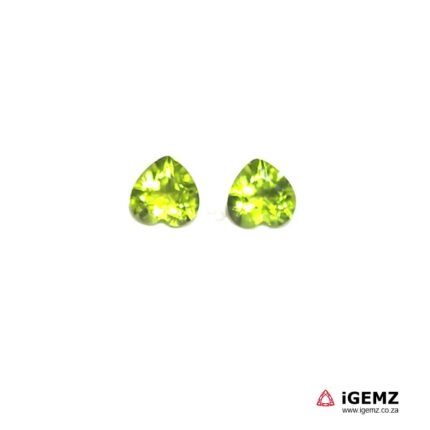
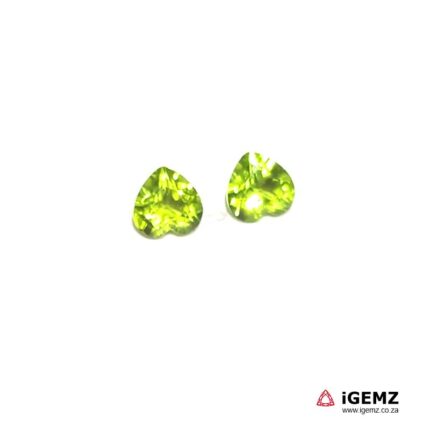
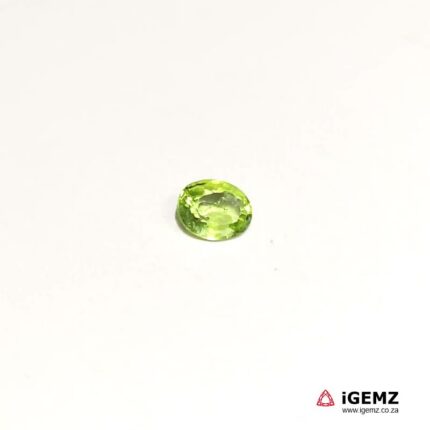
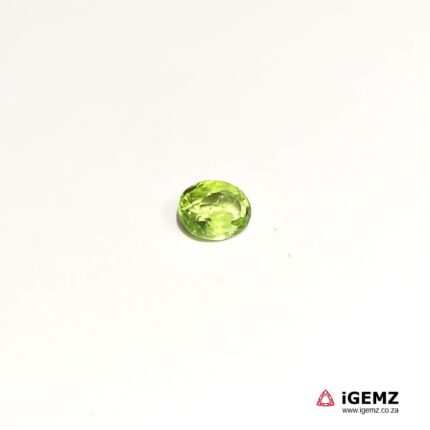
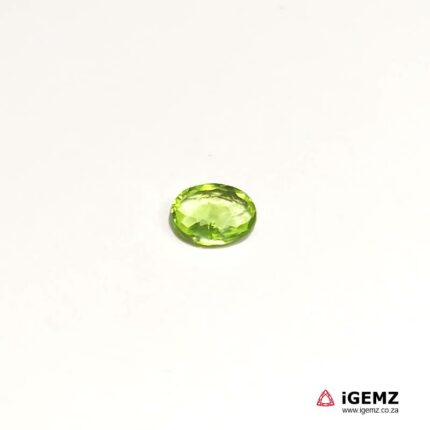
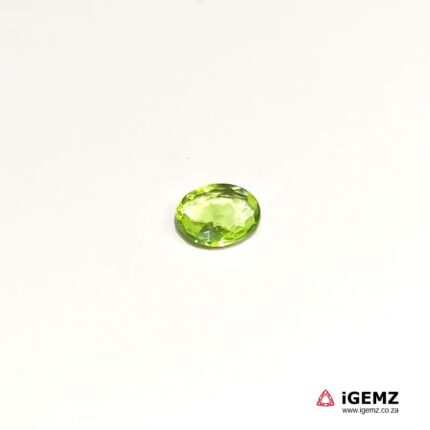
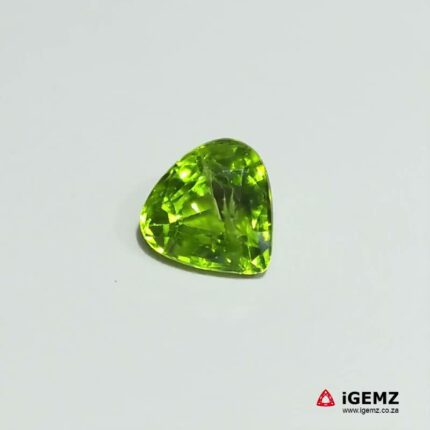
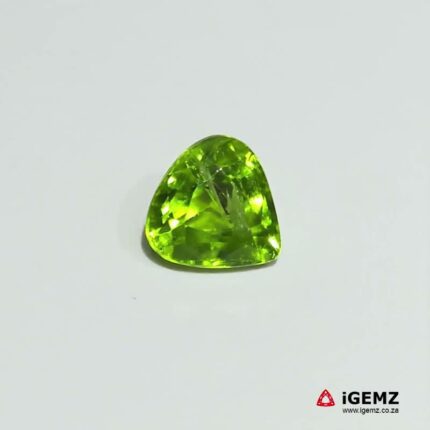
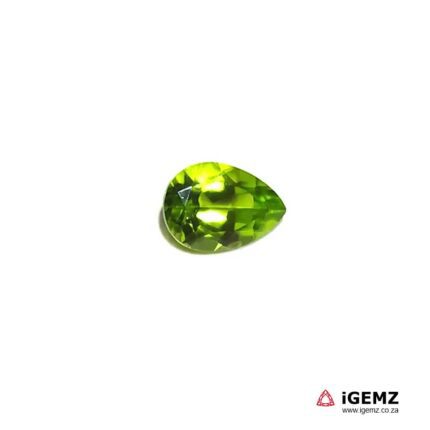
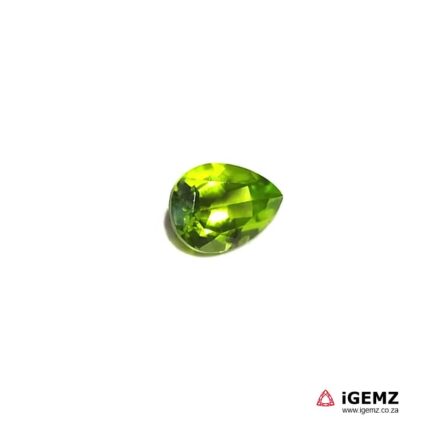
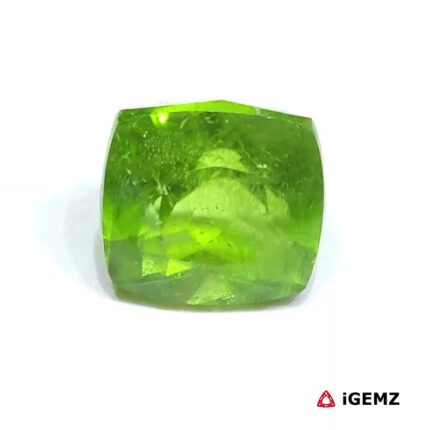
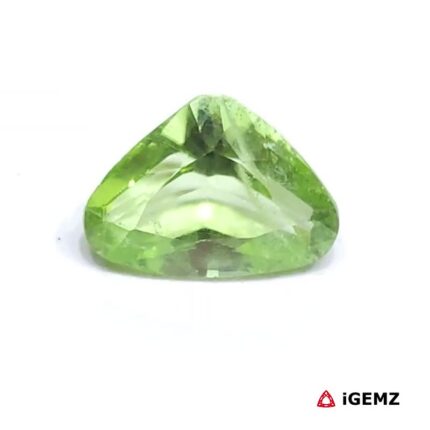
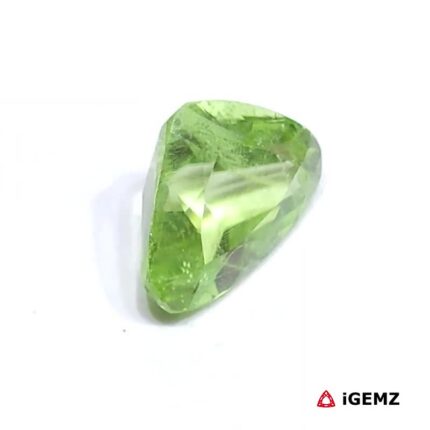
Peridot is one of the few gemstones that occurs in only one colour — green — yet it remains one of the most misunderstood and undervalued gems in the trade. Often confused with emerald, tourmaline or even glass, genuine peridot is a naturally occurring magnesium-rich variety of the mineral olivine and has been treasured since ancient times.
In this guide we examine peridot from a professional gemmological and commercial perspective, covering its physical properties, mineralogy, durability, treatments, origins and how to identify high-quality stones.
What Is Peridot?
Peridot is the gem-quality form of olivine, a magnesium iron silicate mineral found primarily in volcanic and mantle-derived rocks. Unlike most gemstones, peridot is not coloured by trace elements — its green colour comes directly from its iron content.
This makes peridot geologically rare: it forms deep in the Earth’s mantle and is brought to the surface by volcanic activity.
Mineral Composition
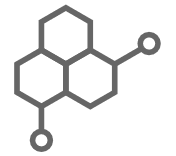
Peridot has the chemical formula:
(Mg,Fe)₂SiO₄
This means it is composed primarily of:
- Magensium
- Iron
- Silicon
- Oxygen
The ratio of magnesium to iron determines the colour:
- High magnesium = bright, vivid green
- High iron = darker, brownish or olive green
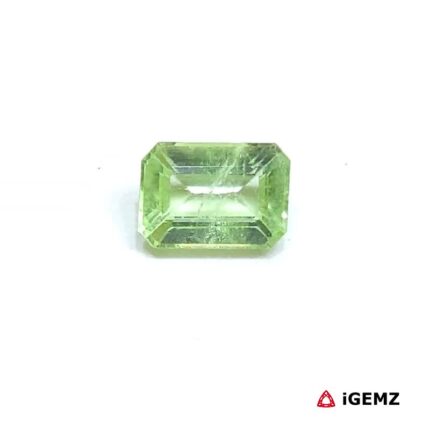
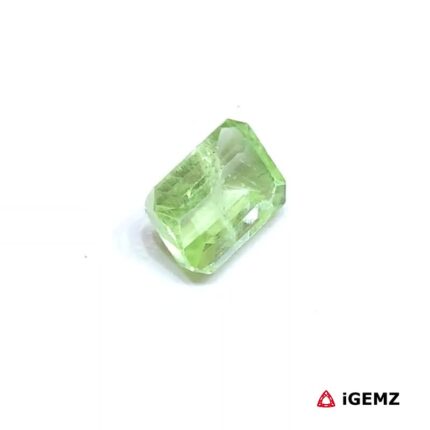
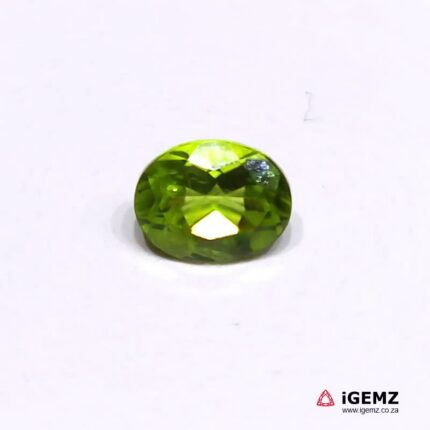
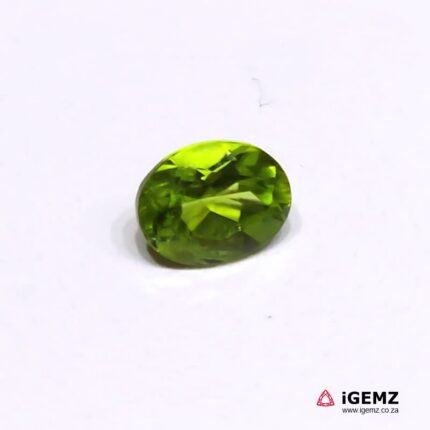
The finest peridot has a rich green hue with minimal brown or yellow tones.
Mineral Family and Crystal System

Peridot belongs to the silicate mineral group, specifically the nesosilicates.
This means its silica tetrahedra exist as isolated units rather than forming chains or sheets.
Its crystal system is orthorhombic, which results in distinct crystal growth patterns and contributes to its natural cleavage directions and optical properties.
Optical and Physical Properties
Peridot has a unique combination of gemmological properties that distinguish it from look-alikes.

Lustre
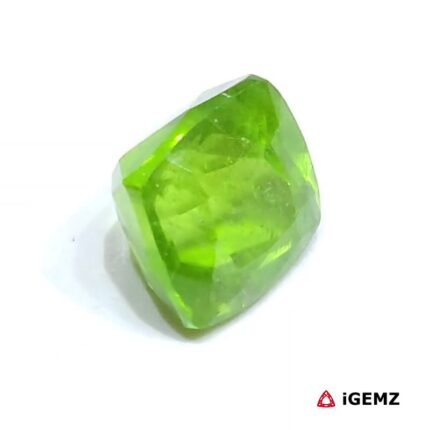
Peridot has a vitreous (glassy) lustre. Well-cut stones show a bright, oily shine when clean and well polished.

Transparency
Gem-quality peridot is transparent. Translucent material is used only in carvings or beads.

Refractive index
1.65 – 1.69
Peridot has noticeable double refraction, meaning facet edges often appear doubled when viewed under magnification — a useful identification feature.

Specific gravity
3.27 – 3.37
Heavier than quartz but lighter than garnet or corundum.
Colour Range
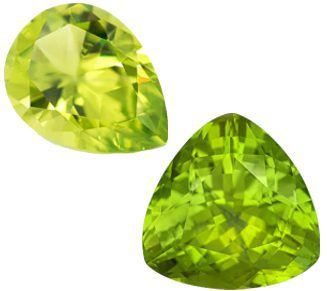
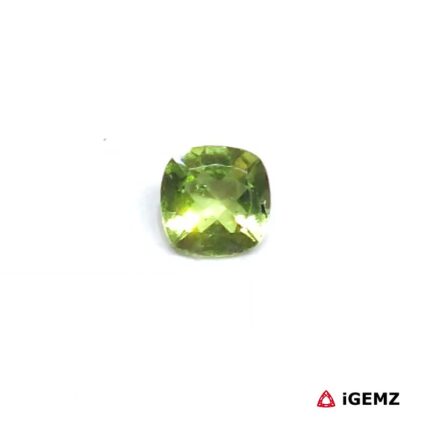
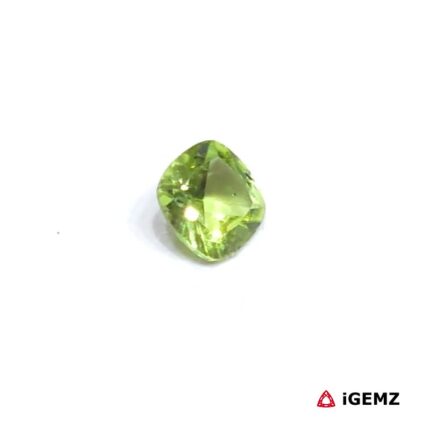
Peridot occurs only in green, but the shade varies:
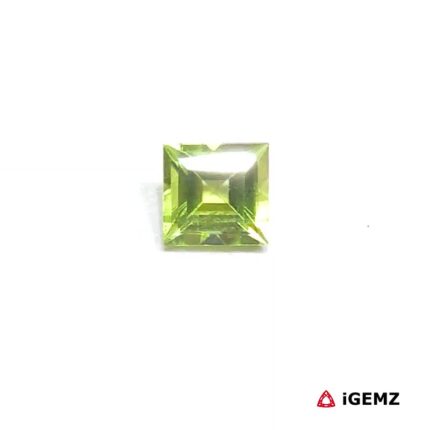
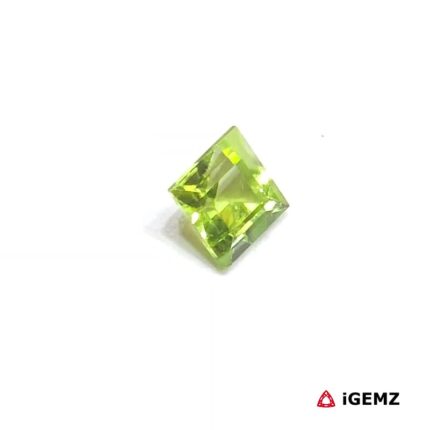
- Yellow-green
- Lime green
- Apple green
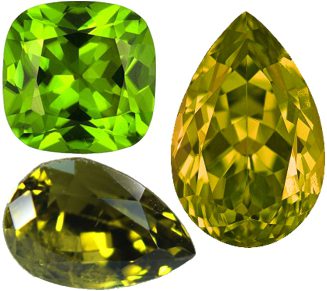
- Olive green
- Brownish green (lower quality)
The most valuable stones display a pure, vivid green with no brown or muddy undertone.
Mohs Hardness and Durability
Peridot has a Mohs hardness of 6.5 to 7, which makes it noticeably softer than sapphire, ruby or diamond.
It also has:
Poor cleavage
Moderate brittleness
This means peridot can scratch, chip and crack more easily than harder gemstones and is best suited for pendants, earrings and protected ring settings.
Treatments

Peridot is one of the few gemstones that is almost always sold untreated.
Common treatments: None
Rare and undesirable: Fracture filling and Surface coating
If a seller claims “heated” or “enhanced” peridot, it is usually a warning sign.
Care and Cleaning
Peridot requires gentle handling.
Avoid:
- Ultrasonic cleaners
- Steam cleaning
- Acids and household chemicals
- Sudden temperature changes
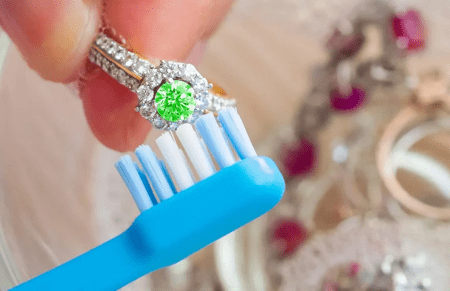
Safe cleaning method:
- Warm water
- Mild soap
- Soft brush
Store peridot separately from harder gemstones such as diamond, sapphire, ruby and quartz to avoid scratching.
Major Origins
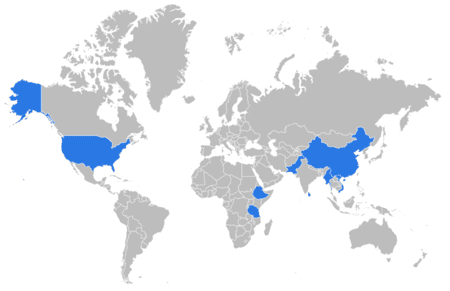
Important sources of peridot include:
- Pakistan (Kashmir region) – finest vivid green material
- Myanmar (Burma)
- China
- Vietnam
- Tanzania
- Ethiopia
- Sri Lanka
- Arizona, USA
Rare and exotic:
- Meteorites (pallasites) contain peridot crystals formed in space
Frequently Asked Questions
Is peridot a natural gemstone?
Yes, peridot is a naturally occurring gemstone and is the gem variety of the mineral olivine.
Does peridot come in colours other than green?
No, peridot only occurs in green. Variations are caused by differing amounts of iron.
Is peridot usually treated?
No, peridot is almost always untreated, making it one of the most natural gemstones on the market.
Is peridot suitable for everyday wear?
Peridot is softer than many gemstones and is best suited for jewellery that is not exposed to heavy wear.
How can I tell if a peridot is real?
Real <a href=”https://www.igemz.co.za/product-category/natural-gemstones/peridot/” target=”_blank”>peridot</a> shows double refraction and has a vitreous lustre. It is also heavier than glass.
Where does the best peridot come from?
Pakistan and Myanmar are known for producing the finest vivid green <a href=”https://www.igemz.co.za/product-category/natural-gemstones/peridot/” target=”_blank”>peridot</a>.
Can peridot be scratched easily?
Yes, with a hardness of 6.5–7, <a href=”https://www.igemz.co.za/product-category/natural-gemstones/peridot/” target=”_blank”>peridot</a> can be scratched by many common gemstones.
What is the chemical formula of peridot?
(Mg,Fe)2SiO4 – magnesium iron silicate.
Why does peridot have an oily shine?
Its vitreous lustre and high refractive index create a distinctive oily-glass appearance.
Is meteorite peridot real?
Yes, <a href=”https://www.igemz.co.za/product-category/natural-gemstones/peridot/” target=”_blank”>peridot</a> crystals found in pallasite meteorites are genuine and extremely rare.